
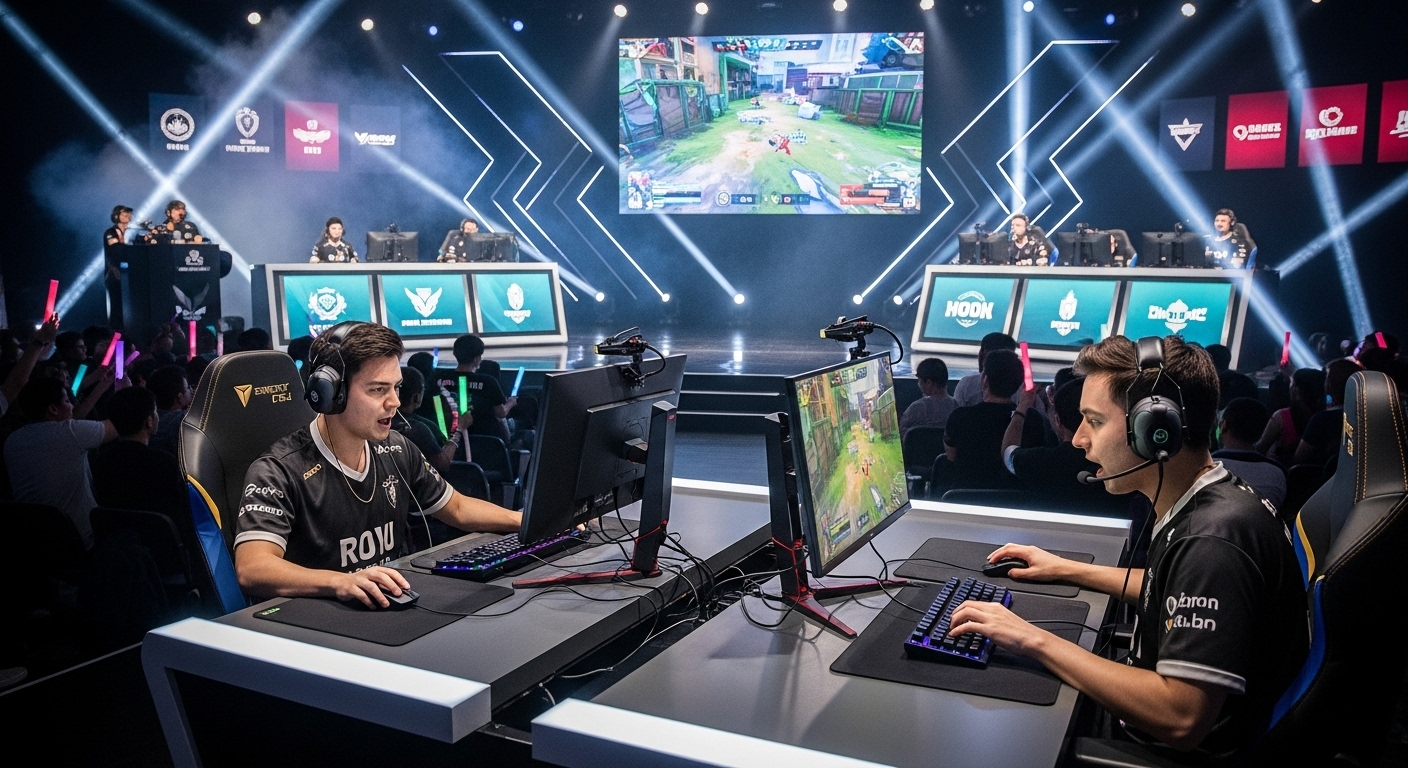
Introduction: A New Arena of Competition
In the 21st century, competition has expanded beyond traditional sports into the digital realm. Esports, short for electronic sports, has emerged as a global phenomenon where skill, strategy, and precision take center stage. Once considered a casual pastime, esports has transformed into a multi-billion-dollar industry, attracting professional players, massive audiences, and corporate sponsorships.
Esports is more than gaming; it is a blend of athleticism, entertainment, and technology. Millions of fans follow professional tournaments, cheer for teams, and engage with content creators around the globe. This transformation reflects society’s growing shift toward digital engagement, where competition and entertainment intersect in a virtual space.
The Origins of Esports
The roots of esports trace back to the late 1970s and 1980s when video games first became popular. Early competitions were simple, often revolving around achieving high scores in arcade games such as Space Invaders and Pac-Man. These contests were localized, small-scale, and often community-focused, yet they laid the groundwork for competitive gaming culture.
The 1990s marked a turning point with multiplayer PC games such as Street Fighter II, Quake, and StarCraft. LAN parties, where players connected computers on the same network, became popular, allowing gamers to compete in real time. These early competitions fostered teamwork, strategy, and skill development—elements that remain essential to esports today.
The introduction of the internet in the early 2000s transformed competitive gaming. Players could now compete globally, and live-streaming tournaments allowed audiences to watch matches in real time. Professional teams, structured leagues, and international competitions began to emerge, establishing the foundation of modern esports.
The Growth of Esports as an Industry
Esports exploded into mainstream recognition during the 2010s. Competitive games such as League of Legends, Dota 2, Counter-Strike: Global Offensive, Overwatch, and Fortnite attracted millions of players and fans worldwide. These games developed structured leagues, professional teams, and tournaments with significant prize pools.
Major esports events now fill arenas and stadiums, drawing crowds comparable to traditional sports. Millions more watch online through streaming platforms, creating an engaged and global fanbase. Sponsorship deals, media rights, merchandise, and advertising revenue have contributed to making esports a multi-billion-dollar industry.
Professional esports teams operate similarly to traditional sports franchises. They employ coaches, analysts, fitness trainers, and psychologists to optimize player performance. This level of professionalism has elevated esports from hobbyist activity to a recognized career path, challenging stereotypes about gamers and redefining what it means to be an athlete.
The Esports Athlete: Skill, Strategy, and Discipline
Professional esports players are true athletes. Their skill sets go beyond quick reflexes and hand-eye coordination; they include strategic thinking, communication, decision-making, and teamwork. Training often involves six to eight hours of practice per day, reviewing gameplay, analyzing opponents, and refining strategies.
Mental resilience is crucial. Competitive gaming can be high-pressure, with matches decided in milliseconds. Teams now employ psychologists and coaches to help players maintain focus, manage stress, and develop coping strategies. Physical fitness is also emphasized to combat fatigue and improve reaction times.
Esports athletes demonstrate that competition is not solely physical. Mental agility, adaptability, and tactical intelligence have become equally important measures of excellence, legitimizing esports as a professional sport in the digital age.
Technology: The Backbone of Esports
Technological innovation has been a major driver of esports growth. High-speed internet, powerful gaming hardware, and advanced graphics engines have enabled seamless, competitive gameplay. Live-streaming platforms allow audiences to watch matches in real time, interact with players, and build communities around their favorite games and teams.
Emerging technologies such as virtual reality and augmented reality are poised to transform esports further. These technologies offer immersive experiences for players and spectators, allowing audiences to feel as though they are inside the game world. Artificial intelligence also has potential in coaching, strategy analysis, and performance optimization.
The digital nature of esports ensures that it transcends geographical boundaries. Players and fans from different countries can connect, compete, and spectate simultaneously, making esports a truly global phenomenon.
Esports Culture: Community and Identity
Esports has cultivated a unique culture centered on community, creativity, and shared passion. Fans engage in online forums, social media, and live-streaming platforms, forming communities that extend beyond geographic or cultural boundaries. This culture promotes a sense of belonging and identity among participants and spectators.
Content creators and streamers play a significant role in shaping esports culture. They provide entertainment, analysis, and personality-driven content, connecting audiences to the games and teams they love. For fans, following a favorite player or team is not just about watching matches—it is an emotional and social experience.
Inclusivity is another hallmark of esports. Unlike traditional sports, physical limitations do not restrict participation. More women, nonbinary individuals, and players from underrepresented regions are entering competitive circuits, broadening diversity and increasing opportunities within the industry.
Education and Career Opportunities in Esports
Esports has created numerous educational and professional opportunities. Universities offer scholarships for competitive gaming, while academic programs in esports management, game design, and broadcasting prepare students for careers in the industry. Students learn not only about gameplay but also about business, technology, and psychology related to competitive gaming.
Professional opportunities extend beyond playing. Analysts, coaches, content creators, commentators, event organizers, and media specialists all contribute to the esports ecosystem. This diverse range of roles demonstrates that esports is more than a form of entertainment—it is a dynamic industry capable of supporting a wide array of careers.
Economic Impact of Esports
The economic influence of esports extends beyond the gaming industry. Sponsorships, advertising, media rights, and merchandising generate billions of dollars annually. Brands recognize esports as a platform to reach highly engaged, tech-savvy audiences worldwide.
Major tournaments attract international visitors, stimulating local economies through hospitality, tourism, and media coverage. Emerging regions are investing in esports infrastructure to develop talent and create economic opportunities. The financial impact of esports highlights its significance as both a cultural and commercial phenomenon.
Challenges Facing Esports
Despite its growth, esports faces several challenges. Player burnout and mental health issues are significant concerns, as intensive training schedules and high-pressure competitions take a toll. Career longevity is also limited, with peak performance often lasting only a few years.
Regulation and governance remain fragmented. Different leagues, organizations, and game publishers operate under varying rules, leading to inconsistencies in contracts, player rights, and tournament structures.
Toxicity and harassment in gaming communities are persistent problems. Promoting inclusivity, respect, and mental well-being is essential to ensure sustainable growth and positive experiences for all participants.
The Future of Esports
The future of esports is promising. Technological advancements such as virtual reality, augmented reality, and artificial intelligence will reshape gameplay and spectator experiences, making esports more immersive and interactive.
Esports is likely to integrate further with education, mainstream media, and entertainment. Collaborations with music, film, and virtual experiences will create new forms of interactive entertainment. Emerging regions will continue contributing to global audiences and talent, ensuring that esports remains a truly international phenomenon.
The continued evolution of esports reflects a broader societal shift toward digital engagement, connectivity, and innovation. It is not just entertainment—it is a new paradigm for competition and community in the digital age.
Conclusion: Esports as a Cultural and Competitive Force
Esports is not merely a passing trend; it is a cultural, technological, and professional revolution. It has redefined athleticism, created vibrant global communities, and established a multi-billion-dollar industry. Players, fans, and organizations now contribute to a dynamic ecosystem that rivals traditional sports in scale and impact.
From humble beginnings in arcades to international tournaments with millions of viewers, esports demonstrates the power of technology to transform human experience. It reflects creativity, dedication, and innovation, offering new ways to compete, connect, and achieve. In the digital era, esports is not only part of the future of entertainment—it is shaping it.