
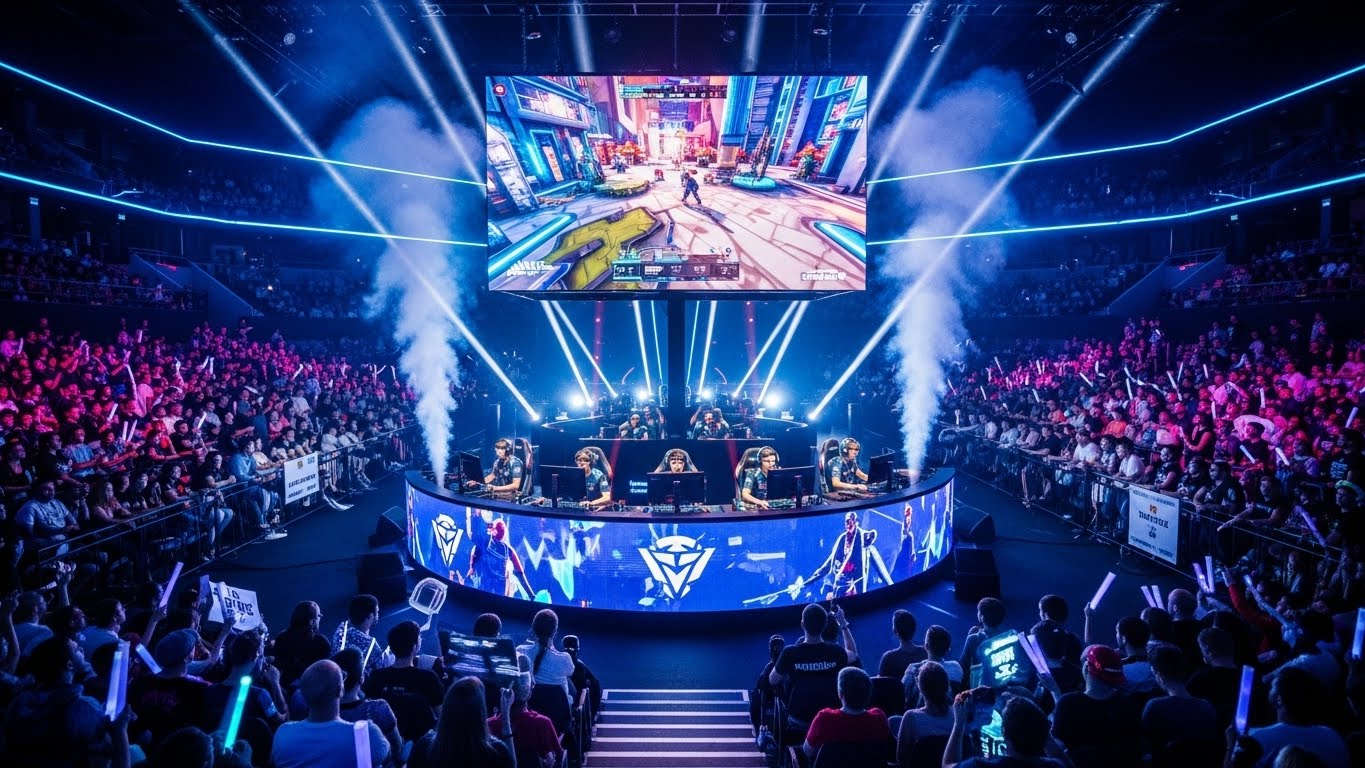
Esports has quickly transformed from a niche subculture to a mainstream global phenomenon. What once began as a hobby for passionate gamers is now a multi-billion-dollar industry, attracting players, sponsors, and millions of viewers worldwide. The evolution of esports over the past decade has been nothing short of spectacular, with the industry growing into a legitimate sport that rivals traditional sports in terms of viewership and revenue.
In this blog post, we will explore the rapid growth of esports, its impact on the gaming community, and how it has reshaped entertainment as a whole. From its humble beginnings to its place in the global sports ecosystem, esports has firmly established itself as a force to be reckoned with.
The Origins of Esports
Esports, short for “electronic sports,” refers to organized, multiplayer video game competitions, particularly between professional players, individually or as teams. While competitive gaming dates back to the early days of video gaming, it wasn’t until the late 1990s and early 2000s that esports began to form as an organized, spectator-driven activity.
The first significant esports tournament was the Red Annihilation tournament in 1997, where players competed in Quake, a first-person shooter. However, it was the late 2000s that marked the beginning of esports as we know it today. Games like Warcraft III, StarCraft II, Counter-Strike, and League of Legends set the foundation for the esports ecosystem by introducing competitive multiplayer formats and building large online communities.
As internet infrastructure improved and streaming platforms like Twitch emerged, it became easier for players and fans to connect. This, in turn, allowed esports to reach a global audience and lay the groundwork for the industry’s massive growth.
The Growth of Esports: From Niche to Mainstream
One of the key factors that have driven the growth of esports is its increasing acceptance in mainstream media and the broader entertainment industry. Esports is no longer just about gamers gathering in basements or small LAN (Local Area Network) parties. Major sports networks, media companies, and advertisers have recognized the potential of esports as an entertainment platform.
The Role of Streaming Platforms
Streaming platforms, particularly Twitch and YouTube Gaming, have played an instrumental role in esports’ growth. These platforms offer fans the ability to watch live gameplay, participate in live chat, and interact with players in real time. Twitch, for instance, revolutionized the gaming landscape by providing a space where gamers could not only watch tournaments but also become content creators themselves.
The rise of Twitch has made esports more accessible to viewers, turning gaming into a spectator sport that can be enjoyed from the comfort of one’s home. In turn, this has attracted major brands and advertisers looking to reach a young, tech-savvy audience. Major companies like Intel, Coca-Cola, and Mercedes-Benz have signed sponsorship deals with esports organizations, helping to legitimize the industry and provide financial backing.
The Rise of Esports Organizations
As the esports scene grew, professional gaming organizations began to emerge. These organizations are responsible for managing players, organizing tournaments, and securing sponsorship deals. Notable esports organizations like Team Liquid, Cloud9, Fnatic, and T1 have become household names in the esports community, with some teams boasting millions of followers across social media platforms.
These organizations have helped to foster a competitive environment that mirrors traditional sports. Teams train rigorously, hire coaches, analysts, and psychologists, and focus on developing strategies to achieve success in their respective games. Some of these organizations have even expanded into other esports titles, building multi-game rosters and increasing their reach.
Esports and its Global Appeal
One of the key drivers of esports’ meteoric rise is its global appeal. Esports tournaments are held in almost every corner of the world, and top players and teams hail from diverse countries and regions. From South Korea, where StarCraft became a national obsession, to North America and Europe, where games like League of Legends and Fortnite have a massive following, esports has transcended borders and cultures.
The Role of International Tournaments
Esports tournaments are not just limited to local or regional events; they have become massive international spectacles. The League of Legends World Championship and The International for Dota 2 are two prime examples of global esports tournaments that attract millions of viewers. These events are often broadcast live on streaming platforms and major TV networks, with commentators and analysts providing in-depth coverage, much like traditional sports events.
What sets esports apart is the sheer scale of its online audience. Major tournaments often attract millions of viewers across multiple countries, creating a truly global community. In fact, some esports events have even outdone traditional sports in terms of viewership, with the League of Legends World Championship finals reaching over 100 million viewers in 2020.
Esports and the Economy: The Financial Impact
Esports is now a multi-billion-dollar industry. According to recent reports, the global esports industry is projected to generate over $1.6 billion in revenue in 2025, with much of that income coming from sponsorships, advertising, media rights, and ticket sales. This financial growth has helped esports teams, players, and organizers achieve lucrative deals and create sustainable career paths for players.
Sponsorship and Brand Partnerships
One of the most significant sources of revenue for esports organizations is sponsorships. Major brands from industries such as tech, automotive, and fashion have flocked to esports as a way to reach a young, engaged audience. Companies like Intel, Adidas, and Red Bull have established partnerships with top esports teams and events, recognizing the immense potential for brand exposure.
Sponsorship deals are not limited to just organizations; individual players also secure endorsement deals. Popular players can earn substantial income from these sponsorships, along with prize money from tournament winnings. Some esports athletes even sign exclusive streaming deals with platforms like Twitch or YouTube, further increasing their earning potential.
The Growth of Esports Betting and Fantasy Leagues
The rise of esports has also fueled a booming betting industry. Esports betting allows fans to place wagers on the outcome of major tournaments, much like traditional sports betting. This has introduced an entirely new level of engagement for fans, creating opportunities for both casual viewers and dedicated enthusiasts to get more involved in the action.
Additionally, fantasy esports leagues, similar to traditional fantasy sports like fantasy football, have gained traction. These leagues allow fans to create virtual teams of esports players and earn points based on their performance in real-world tournaments. This further enhances the sense of competition and engagement among fans.
The Impact of Esports on Traditional Sports
While esports is often seen as a competitor to traditional sports, it has actually led to interesting crossovers between the two. Many professional athletes have recognized the appeal of esports and have started investing in esports teams or even participating in gaming competitions themselves.
Traditional Sports Teams and Esports Investments
Major traditional sports franchises are increasingly looking to tap into the esports market. Teams like the New York Yankees, Paris Saint-Germain, and Dallas Cowboys have invested in esports teams, recognizing the growing popularity of competitive gaming. These sports organizations see esports as an opportunity to diversify their brand and reach a younger, digitally-savvy audience.
In some cases, traditional athletes have even ventured into esports as players. Former NBA star Shaquille O’Neal, for example, has invested in esports organizations and gaming-related ventures. This crossover has helped bring even more legitimacy to esports, positioning it as an entertainment option that bridges the gap between traditional and digital sports.
The Future of Esports: What’s Next?
As esports continues to grow, the future holds exciting possibilities. One of the key areas to watch is the integration of esports into larger entertainment ecosystems. Partnerships with streaming platforms, social media influencers, and traditional sports organizations are likely to deepen, expanding the reach and appeal of esports.
In addition, virtual and augmented reality (VR and AR) technologies could revolutionize the way esports is experienced. These technologies have the potential to create even more immersive experiences for both players and viewers, further blurring the lines between gaming and traditional sports.
Finally, as esports continues to professionalize, we can expect greater focus on player development, mental health support, and long-term career sustainability. As with traditional sports, the physical and psychological demands on esports athletes are high, and organizations will need to prioritize player well-being to maintain a healthy and sustainable competitive ecosystem.
Conclusion
Esports has come a long way since its humble beginnings. What started as a niche hobby has blossomed into a global industry, offering players a career path, fans a new form of entertainment, and brands a fresh avenue for marketing. The rise of esports is a testament to the power of technology, community, and the human desire for competition and entertainment.
As the industry continues to grow and evolve, esports is poised to become an even more integral part of global culture, drawing millions of fans and players into its world. Whether you’re a gamer, a fan, or a curious observer, it’s clear that esports is here to stay, and the future looks brighter than ever.