
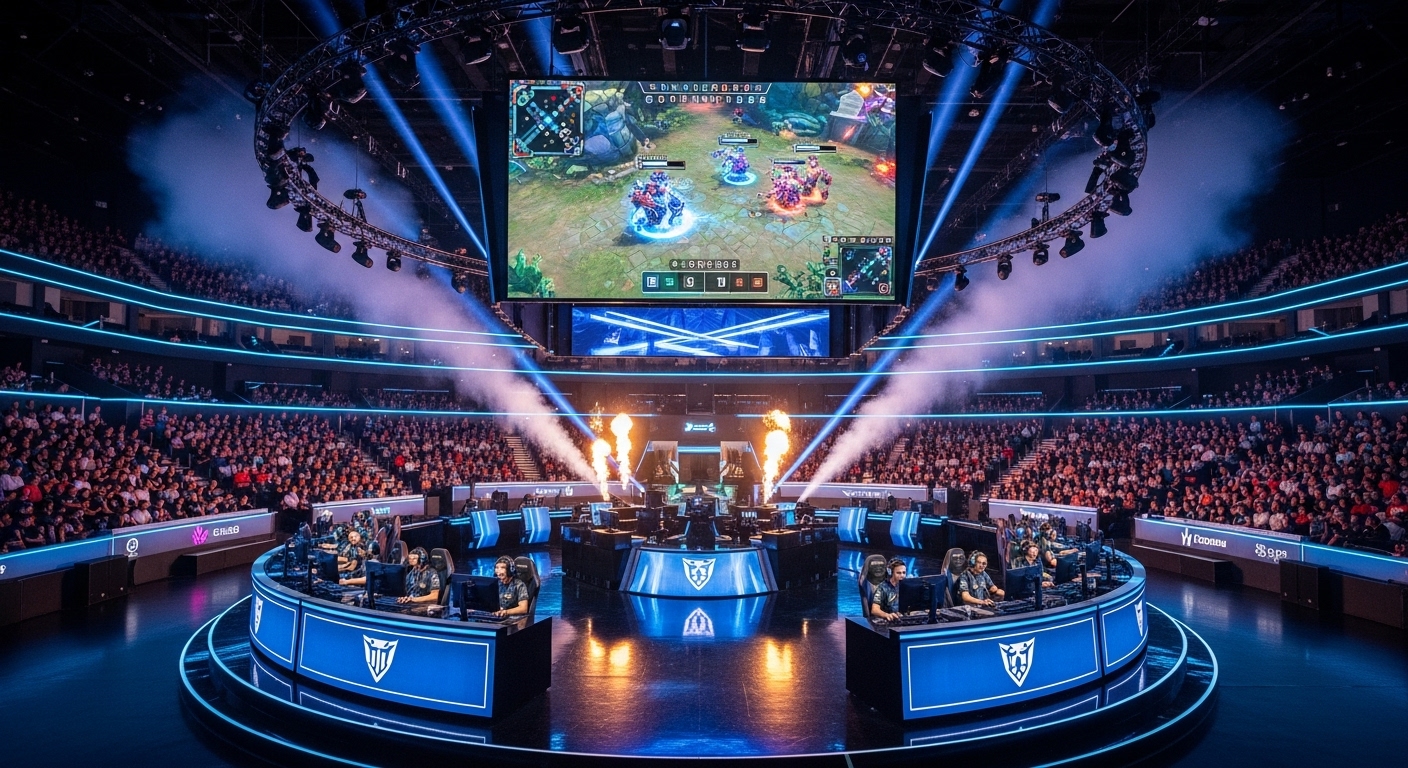
In the past decade, esports has transformed from a niche subculture into a global entertainment phenomenon. No longer just for gamers in basements or small LAN parties, esports has become a multi-billion-dollar industry with millions of fans, professional teams, and top-tier events that rival traditional sports in terms of viewership and prestige. From the early days of competitive video gaming to the massive esports arenas packed with roaring crowds, the journey of esports is nothing short of extraordinary.
This blog will explore the rise of esports, its global impact, the key elements driving its success, and what the future holds for competitive gaming.
What is Esports?
Esports, short for electronic sports, refers to competitive gaming where professional players, often as part of a team, compete in video games for cash prizes, sponsorships, and the adoration of fans. While many people associate esports with popular titles like League of Legends, Dota 2, Counter-Strike: Global Offensive, and Fortnite, it spans a wide range of genres, including strategy games, first-person shooters, sports simulators, and even mobile games.
Esports is not just about playing video games; it’s about cultivating a competitive spirit, teamwork, and strategy at the highest level. Professional players train like athletes, participating in intense practice sessions, learning strategies, and fine-tuning their skills. As a result, esports requires mental agility, fast reflexes, and incredible focus, often on par with traditional sports.
The Early Beginnings of Esports
The origins of esports date back to the early 1970s when video games began to evolve from simple entertainment into competitive activities. One of the first recorded esports events was the 1972 “Spacewar” tournament at Stanford University, which saw students competing in the game Spacewar!. However, esports as we know it today truly began to take shape in the late 1990s and early 2000s.
The introduction of multiplayer online games, like StarCraft in the late 1990s, played a pivotal role in the rise of competitive gaming. As players began to battle against one another online, gaming competitions began to emerge. South Korea, for example, became a trailblazer in esports with the launch of the Korean Pro-Gaming League in 1999. StarCraft players were treated like sports stars, and televised tournaments became incredibly popular, paving the way for other countries to follow suit.
By the mid-2000s, platforms like YouTube and Twitch allowed players to stream their gameplay, attracting more fans to the competitive gaming scene. Esports had officially entered the mainstream.
The Growth of Esports in the 2010s
The 2010s marked the meteoric rise of esports, with gaming titles like League of Legends, Dota 2, and Counter-Strike: Global Offensive achieving global popularity. Professional gaming leagues and tournaments began to emerge worldwide, and esports was no longer confined to the realms of online platforms and small-scale local competitions.
One of the key milestones in esports’ rise came in 2011 with the launch of The International, a Dota 2 tournament with a prize pool that started at $1 million. This tournament showcased the scale and grandeur that esports events could achieve. The prize pool for The International steadily increased year after year, culminating in over $40 million in 2021.
Other tournaments, such as the League of Legends World Championship, became annual events watched by millions of fans across the world. These tournaments offered not only large cash prizes but also a chance to represent one’s team or region at the highest level of competition. As the fanbase grew, major media outlets and sponsorships from global companies began pouring money into the industry.
The Commercialization of Esports
As esports became more popular, it attracted attention from investors, sponsors, and traditional sports organizations. Brands like Coca-Cola, Intel, Razer, and Red Bull began investing heavily in esports teams and tournaments, seeing the potential for massive marketing opportunities. Major media networks, including ESPN and TBS, started broadcasting esports events, bringing competitive gaming into the homes of millions.
One of the most notable changes in esports commercialization came with the rise of sponsorships. Just like traditional sports, esports players and teams began to sign lucrative endorsement deals with multinational companies, adding millions to the industry’s revenue. Additionally, esports organizations began to sign exclusive broadcasting deals with streaming platforms like Twitch and YouTube Gaming, further cementing esports as a viable form of entertainment for mainstream audiences.
The Role of Streaming Platforms
Perhaps no platform has had a bigger impact on the growth of esports than Twitch. Founded in 2011, Twitch allowed gamers to stream their gameplay live to an audience, a feature that was revolutionary at the time. Twitch quickly became the go-to platform for both casual and professional gamers to connect with their fans, and esports events were no exception.
In fact, many of the most-watched esports events today are streamed exclusively on Twitch. These streams are not just about the games themselves but about creating a community around them. Viewers can interact with the players in real-time through chats, participate in discussions, and even support their favorite streamers through donations and subscriptions.
Twitch’s success has also paved the way for other platforms, such as YouTube Gaming, Facebook Gaming, and Trovo, to create a competitive landscape for live-streaming and content creation.
Esports as a Global Phenomenon
Esports is no longer just a Western or Korean phenomenon—it has gone truly global. In China, Southeast Asia, and Brazil, esports has become deeply embedded in the culture, and these regions are increasingly producing top-tier players and teams. The popularity of games like League of Legends and Honor of Kings in these regions has led to the rise of regional leagues and competitions.
For example, China’s League of Legends Pro League (LPL) and South Korea’s League of Legends Champions Korea (LCK) are widely considered to be two of the most competitive leagues in the world. These regions have nurtured some of the most famous esports players, who are revered as national heroes in their countries.
In addition to the global growth, esports has also seen increased integration with traditional sports organizations. The NBA has launched its own esports league, the NBA 2K League, while football clubs like Paris Saint-Germain and Manchester City have entered the world of esports by signing professional gamers to represent their brands.
Esports and Education: A New Frontier
In addition to being a global entertainment industry, esports is increasingly making its way into education. Universities around the world are offering esports scholarships, where students can earn a degree while competing in professional gaming tournaments. Some institutions, like UC Irvine and The University of Utah, have even developed entire esports programs and facilities dedicated to cultivating the next generation of esports professionals.
Moreover, esports management programs are becoming more common, with students learning the ins and outs of organizing tournaments, managing teams, securing sponsorships, and developing digital content. This trend reflects the growing recognition of esports as a legitimate career path, not only for players but also for broadcasters, analysts, coaches, and event organizers.
The Future of Esports: What’s Next?
The future of esports looks incredibly promising. With the growth of mobile gaming, esports is beginning to break into the realm of mobile competitions, with games like PUBG Mobile and Clash Royale gaining significant traction. Mobile gaming platforms, particularly in Asia, have already transformed esports and opened up the industry to an entirely new audience.
Additionally, the integration of virtual reality (VR) and augmented reality (AR) is on the horizon, offering players and viewers an immersive experience that will redefine what competitive gaming can look like. Imagine a future where fans can experience esports events in 360-degree VR or even compete in virtual environments themselves.
Esports also stands to benefit from the Olympic movement. Though esports is not yet an official Olympic sport, discussions have been ongoing about its potential inclusion. The global reach and immense popularity of esports make it an appealing candidate, especially with the rise of younger audiences who have grown up with gaming as a major part of their culture.
Conclusion: The New Age of Sports
Esports has come a long way from its humble beginnings. Today, it stands as one of the most dynamic and exciting entertainment industries in the world. With a passionate fanbase, massive sponsorship deals, and increasing global reach, esports is poised to continue its meteoric rise.
As technology continues to advance and the lines between physical and digital entertainment blur, it’s clear that esports is not just a passing trend—it’s the future of competition, entertainment, and sports. Whether you’re a gamer, a fan, or an investor, it’s time to recognize that esports is here to stay, and its influence will only grow in the years to come.