
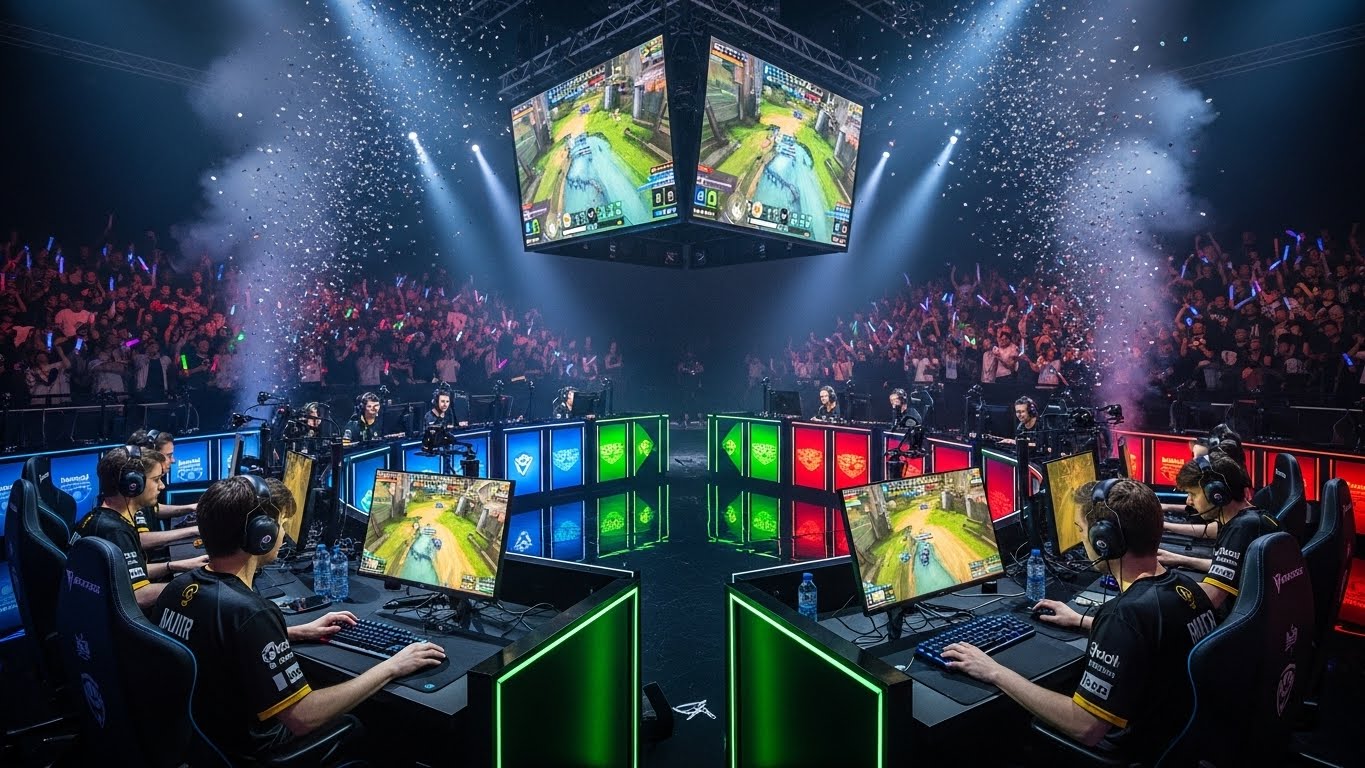
Esports is not just a buzzword anymore. It has transformed into a multi-billion-dollar industry, captivating millions of players, fans, and organizations across the globe. In the past few decades, video gaming, once considered a hobby for a niche group of enthusiasts, has evolved into a global phenomenon that competes with traditional sports in terms of viewership, sponsorship, and media coverage. This shift represents a massive change in the cultural fabric, giving rise to professional leagues, international tournaments, and dedicated teams of players that are recognized as top athletes in their respective fields.
In this blog post, we will explore the history, growth, and future of esports, examining the factors that have propelled it to the forefront of entertainment, the challenges it faces, and its potential for further expansion.
The Origins of Esports
To understand how esports reached its current status, we need to look back at its humble beginnings. The history of competitive gaming dates back to the early days of video games. In the 1970s, the first competitive video game event was held, a Pong tournament organized by Atari. It was a small, community-driven event, but it laid the groundwork for future competitions. The 1990s saw the emergence of competitive gaming in arcades, with games like Street Fighter and Mortal Kombat offering a platform for players to face off against one another.
In the late ’90s and early 2000s, the growth of the internet revolutionized gaming by allowing players to compete with each other online. Games like Quake, StarCraft, and Warcraft gave rise to professional gaming leagues, and events like the World Cyber Games and ESL (Electronic Sports League) began to take shape. These early events attracted passionate players, but the prize pools were modest, and the audience was mostly composed of gaming enthusiasts.
The Evolution of Esports: A Global Industry
The real turning point for esports came in the mid-2000s, when streaming platforms like Twitch and YouTube began to give professional gamers and esports organizations a global platform to showcase their talents. With these platforms, anyone could watch high-level competition from anywhere in the world, and the audience began to grow exponentially. The rise of streaming also allowed content creators and professional players to build large followings, which in turn attracted sponsorships and endorsements from major brands.
As esports became more mainstream, it started to resemble traditional sports in many ways. Large-scale events were held in stadiums, drawing in tens of thousands of spectators, and millions more tuned in online to watch. Major game publishers, such as Riot Games, Blizzard Entertainment, and Valve, began to invest heavily in the development of esports ecosystems for their games. For example, Riot Games’ League of Legends has become one of the most popular esports titles globally, with an annual world championship that boasts a multi-million-dollar prize pool.
The 2010s saw esports evolve from a niche market to a major industry. By 2018, the global esports market was estimated to be worth $1.1 billion, and it has continued to grow. The introduction of franchised leagues, such as the Overwatch League and Call of Duty League, further solidified the professional nature of esports, with teams and players signing multi-million-dollar contracts, and viewers flocking to watch high-stakes competitions in person or online.
Esports as a Profession
One of the most fascinating aspects of esports is the professionalization of the industry. Professional esports athletes, coaches, analysts, and team managers now make up a large part of the esports ecosystem. Players can earn substantial salaries, with some top-tier players making millions in prize money, sponsorships, and streaming revenue. This has helped to elevate esports into a serious career path for many young individuals.
A prime example of this is the rise of League of Legends players, who can sign contracts worth millions of dollars to play for prestigious teams like T1, Cloud9, and G2 Esports. In addition to prize winnings, these players often benefit from sponsorships with global brands such as Coca-Cola, Nike, and Red Bull. The appeal of being a professional esports player has never been stronger, especially with the growing recognition of esports as a legitimate career option.
But it’s not just the players who are benefiting from the rise of esports. Coaches and analysts who help players improve their strategies and performance are also highly sought after. Teams now invest in full-time coaching staffs, including fitness trainers, psychologists, and nutritionists, to help their players reach peak performance. This professionalization mirrors traditional sports, where athletes have a full support team to help them stay at the top of their game.
The Growth of Esports Viewership
One of the most telling signs of esports’ success is its viewership numbers. Major esports tournaments now attract millions of viewers worldwide, making them competitive with traditional sports events like the Super Bowl or the FIFA World Cup. In 2020, the League of Legends World Championship Final had over 100 million viewers, surpassing the audience of some of the biggest traditional sports events.
Streaming platforms like Twitch, YouTube Gaming, and Facebook Gaming have played a critical role in this growth. These platforms not only provide a space for live competitions but also for content creators to build personal brands. Gamers, both professional and amateur, can stream their gameplay, interact with fans, and earn revenue through subscriptions, donations, and sponsorships.
Twitch, in particular, has become the de facto hub for esports and gaming content. It has become a place where fans can watch live broadcasts of esports events, cheer for their favorite players, and even engage in conversations with the community. With the rise of esports personalities and influencers, Twitch has become a vital part of the esports ecosystem.
Major Esports Titles
As esports grows, certain games have emerged as flagship titles in the industry. While there are dozens of games that have competitive scenes, a handful have captured the attention of both players and fans. These games have become central to the world of professional esports.
- League of Legends (LoL): Developed by Riot Games, League of Legends is arguably the most well-known esports title in the world. The game is a multiplayer online battle arena (MOBA) that has been a staple of the esports scene since its release in 2009. Its competitive ecosystem is vast, with regional leagues around the world feeding into the League of Legends World Championship, which is watched by millions.
- Dota 2: Developed by Valve, Dota 2 is another MOBA that has been a key player in esports. The game’s international tournament, The International, offers one of the largest prize pools in esports, often exceeding $30 million. Dota 2 attracts top-tier talent from all over the world, making it one of the most competitive esports titles.
- Counter-Strike: Global Offensive (CS:GO): CS:GO is one of the most popular first-person shooters in esports. Developed by Valve and Hidden Path Entertainment, it has a long-standing competitive scene that spans over a decade. The game’s intense, skill-based gameplay has made it a fan favorite in both casual and professional circles.
- Fortnite: Developed by Epic Games, Fortnite is a battle royale game that took the world by storm upon its release in 2017. Its massive popularity has been aided by its free-to-play model and frequent updates. Fortnite has become a key title in esports, hosting its own competitive events with impressive prize pools, including the Fortnite World Cup.
- Valorant: Another title from Riot Games, Valorant is a tactical first-person shooter that combines elements of Counter-Strike and Overwatch. Since its release in 2020, Valorant has quickly gained traction in the esports scene, with major tournaments and organizations backing the game.
The Future of Esports
Esports has already experienced explosive growth, but the industry is still in its infancy. As technology continues to evolve, so too will esports. Several trends are shaping the future of the industry:
- Mobile Esports: With the rise of smartphones and mobile gaming, mobile esports is expected to become a significant part of the global esports scene. Games like PUBG Mobile and Free Fire have already seen massive success in regions like Southeast Asia and India, and their popularity is only expected to grow.
- Virtual Reality (VR) and Augmented Reality (AR): As VR and AR technology improve, they have the potential to revolutionize esports by creating immersive, interactive experiences. Imagine watching a live esports event from a VR headset, where fans can “sit” courtside or explore the game world from within.
- Esports in the Olympics: There’s growing speculation about the possibility of esports being included in the Olympic Games. Some esports titles are already considered “sports-like” due to their emphasis on teamwork, strategy, and physical dexterity. Although this is still a debated topic, the inclusion of esports in traditional sporting events could give the industry even more legitimacy.
- Diversity and Inclusion: As the esports community continues to grow, there will likely be an increased focus on making the industry more inclusive. Efforts to promote gender diversity, support players from underrepresented regions, and create safer spaces for all players are already underway and will likely expand in the future.
Conclusion
Esports has evolved from a niche pastime to a global entertainment industry that rivals traditional sports in terms of viewership, sponsorship, and media coverage. The professionalization of gaming, the rise of streaming platforms, and the explosion of major esports titles have all contributed to the sector’s rapid growth. As we look to the future, the continued development of esports will be shaped