
Introduction
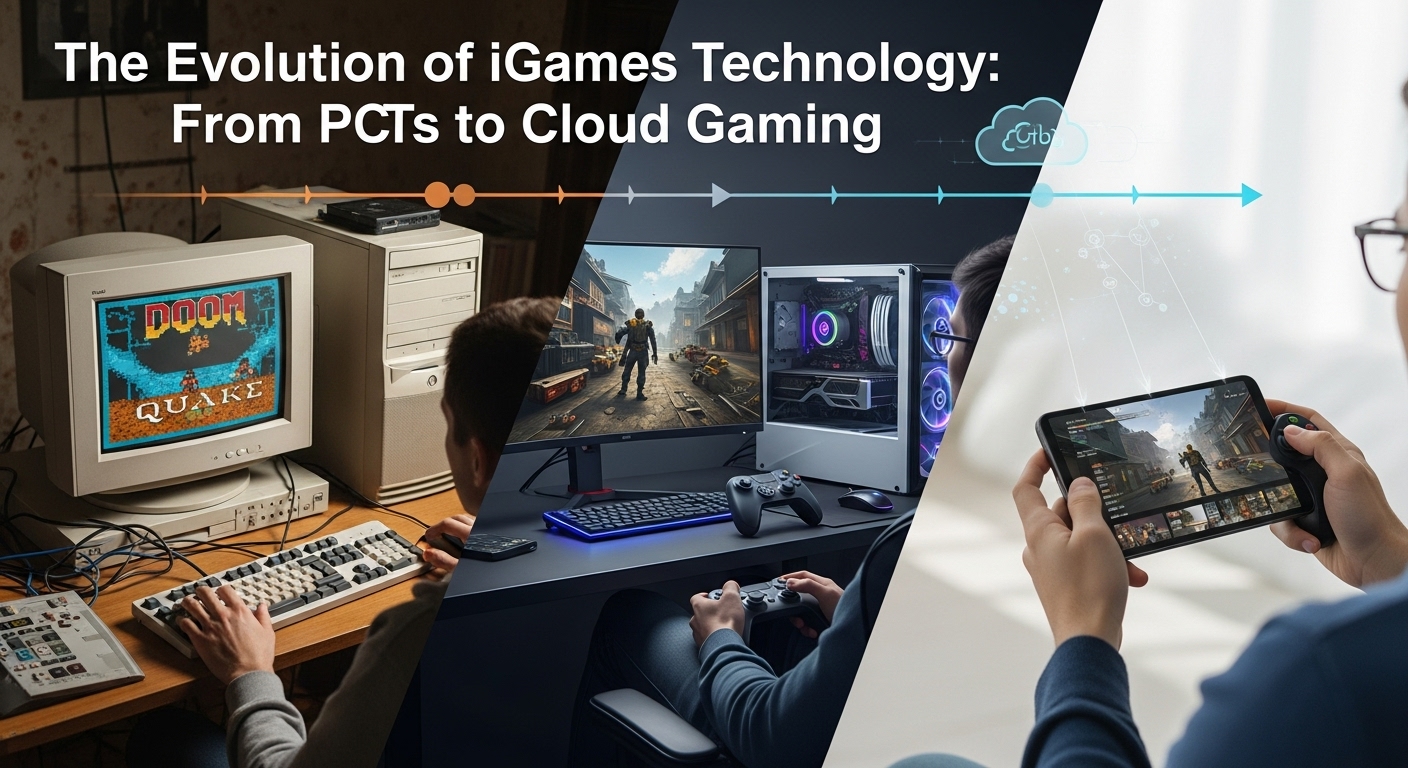
Competitive iGames are as much about technology as skill. From the early days of LAN parties to modern cloud-based tournaments, advancements in hardware, software, and networking have transformed how iGames are played, streamed, and monetized. This blog explores the technological journey behind competitive gaming and how it shapes the future.
Early Hardware and Gaming PCs
In the 1990s, competitive gaming was closely tied to hardware:
- High-performance PCs: Gamers sought the fastest processors and graphics cards to gain an edge.
- Peripherals: Mechanical keyboards, precision mice, and CRT monitors improved responsiveness.
- LAN setups: Local tournaments required players to bring their own rigs to ensure parity.
The arms race for better hardware laid the foundation for professional iGaming.
Networking Advancements
The internet changed everything:
- Broadband adoption: Reduced latency, allowing smoother online matches.
- Server infrastructure: Dedicated servers minimized lag and cheating.
- Matchmaking systems: Platforms like Steam introduced automated matchmaking for fair play.
Connectivity enabled global competition and the growth of online tournaments.
Streaming Technology
Live streaming has been a game-changer:
- Twitch and YouTube Gaming: Allowed fans worldwide to watch competitive matches.
- Low-latency streaming: Essential for real-time interaction and esports betting.
- OBS Studio and XSplit: Software tools enabled professional-quality broadcasting from home setups.
Streaming also created new revenue models through subscriptions, donations, and sponsorships.
Game Engines and Development
Modern iGames are powered by advanced engines:
- Unreal Engine: Known for stunning graphics and versatile design.
- Unity: Popular for mobile and indie competitive games.
- Custom engines: Developed by AAA studios to optimize competitive balance.
Game engine innovations ensure smooth gameplay, realistic visuals, and competitive integrity.
Cloud Gaming and Accessibility
Cloud gaming is revolutionizing the industry:
- Platforms like NVIDIA GeForce Now and Xbox Cloud Gaming: Allow high-quality gaming on low-end devices.
- Reduced hardware barriers: More players can compete without investing in expensive rigs.
- Global reach: Players from regions with limited PC access can join international tournaments.
Cloud technology makes competitive iGames more inclusive and scalable.
VR and AR in iGames
Virtual and augmented reality are expanding possibilities:
- Immersive experiences: Players feel like they’re “inside” the game world.
- New genres: VR shooters, rhythm games, and simulations offer fresh competitive opportunities.
- Spectator experiences: AR overlays enhance viewing, showing stats and player positions in real-time.
While still emerging, VR/AR esports are poised to attract new audiences.
Anti-Cheat Technology
Ensuring fairness is critical:
- Advanced detection algorithms: Identify cheating patterns in real-time.
- Hardware verification: Prevents tampering with controllers or software.
- Community reporting: Supplements automated systems to catch exploiters.
Trust in competitive integrity is essential for industry growth.
AI and Data Analytics
AI drives both gameplay improvement and tournament analysis:
- Player coaching: AI evaluates performance, highlighting strengths and weaknesses.
- Strategic insights: Teams use AI to analyze opponents and predict strategies.
- Match predictions: AI-powered models forecast outcomes for betting and audience engagement.
Data-driven decision-making enhances professionalism in iGames.
The Future of iGames Technology
The next decade promises:
- 5G networks: Ultra-low latency for mobile and cloud tournaments.
- Haptic feedback and motion sensors: Increased immersion for players.
- Blockchain integration: Secure digital asset ownership and transparent tournament prize management.
Technological innovation will continue shaping competitive iGames globally.
Conclusion
From clunky PCs to immersive VR arenas and cloud-based tournaments, technology has been the backbone of iGames evolution. Aspiring players, developers, and fans must stay aware of these advancements to compete, spectate, and engage effectively. The future of competitive iGames is not just about skill—it’s about embracing innovation.