
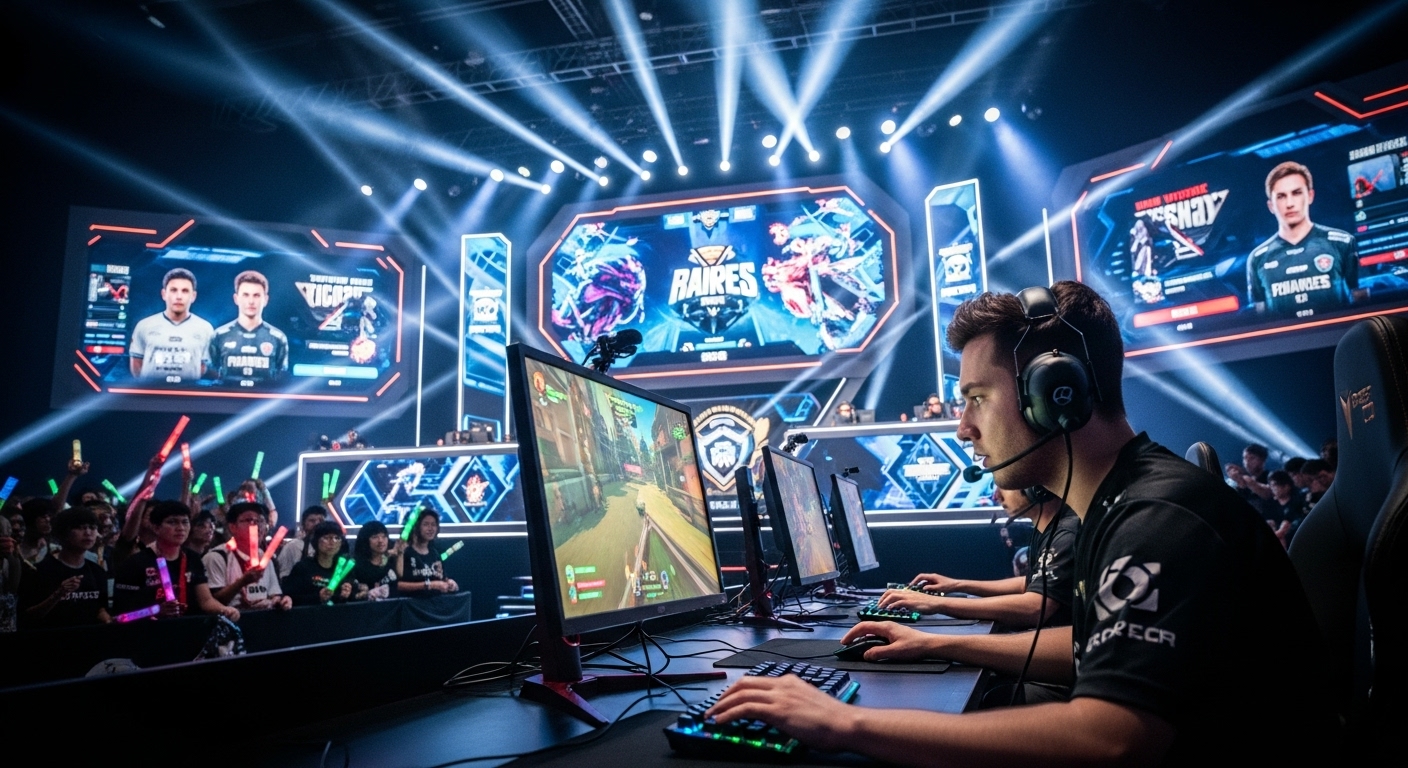
Esports, short for electronic sports, has emerged as a defining force in modern entertainment. Over the past two decades, competitive gaming has evolved from small-scale tournaments among friends into a billion-dollar industry watched by millions worldwide. The rise of esports reflects the intersection of technology, culture, and human competitiveness, creating an entirely new form of professional sport. Its influence is widespread, affecting not only the gaming industry but also education, media, entertainment, and global culture.
Esports is no longer simply a hobby; it has become a legitimate career path, a major form of entertainment, and a cultural movement. This blog explores the history, growth, economic impact, technological innovations, and cultural significance of esports, while also examining the challenges and opportunities the industry faces today.
The Origins of Competitive Gaming
The history of esports can be traced back to the late 1970s and 1980s, when arcade games such as Space Invaders, Pac-Man, and Donkey Kong became competitive arenas. Players would compete for high scores, and local competitions were organized in arcades and gaming centers. These early competitions laid the groundwork for the esports phenomenon, emphasizing skill, strategy, and the thrill of competition.
In the 1990s, the rise of PC gaming and local area networks allowed players to compete more efficiently. Titles like Doom, Quake, and Warcraft facilitated multiplayer gaming, often connecting players within universities and small communities. Early tournaments were modest but demonstrated that organized gaming could attract dedicated audiences and passionate participants.
The Emergence of Professional Esports
The early 2000s marked the professionalization of esports. High-speed internet connectivity allowed players to compete across continents, while South Korea became a hub for professional gaming. StarCraft: Brood War gained particular prominence, with televised tournaments drawing millions of viewers and establishing esports as a legitimate career in the country.
During this era, esports organizations began forming. Teams were created with coaches, analysts, and managers, and players received salaries for their participation. International tournaments started offering substantial prize pools, which attracted top talent and professionalized the industry. Games such as Counter-Strike, DotA, and Warcraft III became foundational competitive titles with global followings.
The Role of Streaming Platforms
Streaming platforms revolutionized the way esports reached audiences. Platforms such as Twitch and YouTube Gaming allow fans to watch live tournaments, interact with players, and participate in online communities. This interactivity differentiates esports from traditional sports, as audiences can communicate in real-time and feel closely connected to the competition.
Streaming also provides opportunities for amateur players to gain recognition. Content creators can build audiences, monetize their streams, and even transition into professional esports careers. The combination of live competition, commentary, and interactive engagement has fueled the explosive growth of esports globally.
Popular Esports Titles
Esports spans a diverse array of game genres, each with its unique competitive scene. Multiplayer Online Battle Arenas (MOBAs) such as League of Legends and Dota 2 emphasize strategy, teamwork, and long-term planning. First-Person Shooters (FPS) like Counter-Strike: Global Offensive and Overwatch require precision, reflexes, and tactical coordination.
Battle royale games, including Fortnite and PUBG, focus on adaptability, survival, and decision-making under pressure. Fighting games such as Street Fighter and Super Smash Bros. showcase individual skill and split-second decision-making. Each genre attracts dedicated fan bases and offers unique opportunities for professional play, audience engagement, and tournament organization.
Professional Players and Teams
Professional esports players are akin to traditional athletes. Success requires thousands of hours of practice, mental resilience, and strategic thinking. Players must maintain high levels of focus, adapt to new strategies, and coordinate seamlessly with teammates. Top players often achieve celebrity status, attracting sponsorships, media attention, and global recognition.
Esports teams function like professional sports franchises. Organizations employ managers, coaches, analysts, and support staff to ensure peak performance. Teams participate in leagues and tournaments worldwide, cultivating loyal fan bases and securing lucrative sponsorships. This professional structure has elevated esports to a level of prestige comparable to traditional sports.
The Economics of Esports
Esports is a multi-billion-dollar industry fueled by multiple revenue streams. Tournament prize money, sponsorships, merchandise, advertising, and ticket sales form the core of esports revenue. Major tournaments such as The International for Dota 2 and the League of Legends World Championship offer prize pools exceeding tens of millions of dollars, demonstrating the financial stakes of competitive gaming.
Sponsorships play a critical role, with global brands partnering with teams and tournaments to reach highly engaged audiences. Merchandising, in-game purchases, and branded content further increase revenue, solidifying esports as a lucrative and sustainable industry. Investors continue to pour capital into esports organizations, recognizing the growth potential of this dynamic market.
Global Reach and Cultural Influence
Esports is a truly global phenomenon. Competitive hubs exist in South Korea, China, North America, Europe, and increasingly in regions like Southeast Asia and Latin America. International tournaments foster cross-cultural interaction, bringing together players and fans from diverse backgrounds and promoting global collaboration and competition.
The cultural impact of esports extends beyond gaming. Professional players are influential figures, inspiring younger generations to pursue careers in gaming, digital content creation, and related fields. Esports also challenges conventional ideas about sports, emphasizing mental agility, strategy, and skill as critical components of competitive achievement.
Technology and Innovation in Esports
Technology underpins the entire esports ecosystem. High-speed internet, advanced gaming hardware, and professional-grade software enable fair and engaging competitions. Analytics tools track player performance, providing insight into reaction times, strategy efficiency, and teamwork.
Emerging technologies such as virtual reality, augmented reality, and artificial intelligence are redefining competitive gaming. AI can generate opponents, analyze strategies, and enhance training programs. VR and AR offer immersive experiences for both players and viewers, expanding the ways audiences engage with esports. Technology continues to push the boundaries of what is possible in competitive gaming.
Esports in Education
Esports is increasingly recognized as a legitimate field within education. Colleges and universities offer scholarships for competitive gamers, creating structured programs that teach teamwork, strategy, and leadership. These programs also emphasize digital literacy and career development, preparing students for professional opportunities within and beyond gaming.
High school esports programs are also expanding, fostering early talent and providing competitive experience. Integrating esports into educational systems validates the skill, dedication, and strategic thinking required to succeed in the industry, while also providing students with pathways to professional careers.
Mental and Physical Demands
Competitive gaming places significant mental and physical demands on players. Extended practice sessions can lead to eye strain, repetitive stress injuries, and mental fatigue. The intense focus required to compete at the highest level necessitates strong mental resilience and physical health.
Professional teams employ fitness trainers, psychologists, and health advisors to maintain player well-being. Prioritizing health ensures players can perform consistently, sustain their careers, and avoid burnout. This emphasis on physical and mental wellness demonstrates the increasing professionalism of esports organizations.
Fan Engagement and Community
Esports fans are highly engaged, creating interactive and participatory communities. Unlike traditional sports, audiences can communicate directly with players through live chats, social media, and interactive features on streaming platforms. Fantasy esports leagues, polls, and tournaments enhance fan participation and immersion.
The global esports community is vibrant and diverse, with fans organizing events, competitions, and online discussions. This active engagement strengthens loyalty and fosters a sense of belonging, transforming esports from a mere competition into a cultural phenomenon.
Challenges in the Esports Industry
Despite rapid growth, esports faces several challenges. Cheating, match-fixing, and unethical behavior threaten the integrity of competition. Standardizing rules and maintaining fair play are essential to preserving credibility.
Career longevity is another concern. Esports careers can be relatively short due to the demands on reflexes, strategy, and mental endurance. Addressing player health, training, education, and post-competition career planning is critical to sustaining the industry and protecting talent.
The Future of Esports
The future of esports is full of possibilities. Technological innovations such as AI, virtual reality, and cloud gaming will redefine competition and fan experiences. Global expansion into new markets will attract additional audiences, players, and sponsors, solidifying esports as a dominant form of entertainment.
Esports will likely integrate further with mainstream entertainment, including music, movies, and live events. Cross-industry collaborations will increase visibility and cultural relevance. Interactive, immersive experiences will transform how fans watch and participate, creating deeper engagement and global connectivity.
As esports continues to evolve, it will remain a platform where skill, strategy, and passion converge. Its influence on culture, education, and entertainment will continue to grow, cementing its place as a permanent and influential global phenomenon.
Conclusion
Esports has grown from casual gaming to a global entertainment powerhouse. It combines skill, strategy, teamwork, and technological innovation to create experiences that rival traditional sports. The industry continues to expand, driven by professional players, passionate fans, and technological advancements.
Esports influences culture, education, and business while providing professional opportunities for players and creators. It has transformed gaming into a legitimate career path and a mainstream entertainment form. The rise of esports reflects human adaptability, creativity, and competitiveness, demonstrating how digital technology can redefine competition, entertainment, and community engagement.
Esports is more than a pastime; it is a cultural movement, a global industry, and a symbol of the evolving landscape of entertainment. Its growth exemplifies the limitless potential of digital competition, connecting players and fans across the world and redefining what it means to compete and succeed in the modern age.