
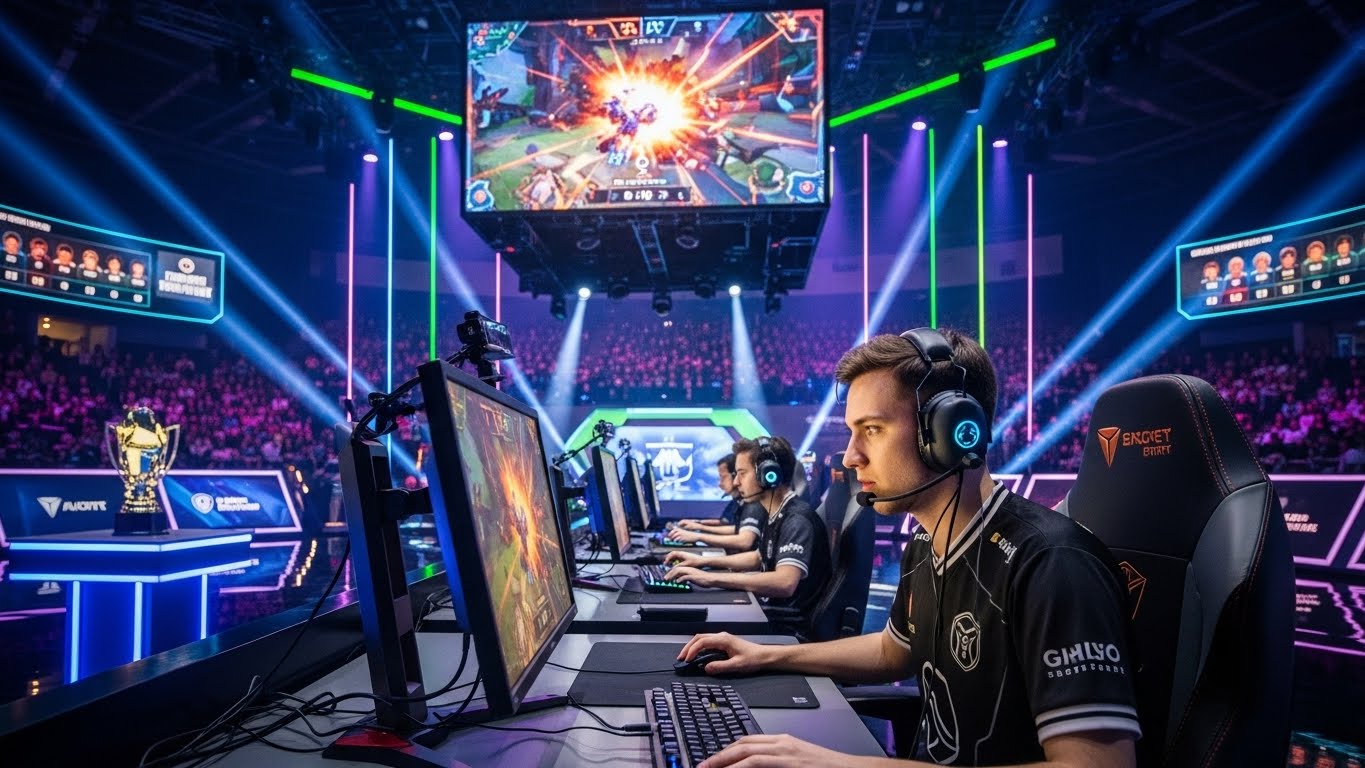
Esports has emerged as one of the most exciting and influential aspects of modern entertainment. Once considered a niche hobby for gamers, competitive gaming has grown into a global industry, complete with professional players, massive tournaments, and millions of viewers worldwide. The rise of esports reflects not only technological advancement but also a shift in how society perceives competition, teamwork, and entertainment. This blog explores the evolution of esports, its cultural and economic significance, and the factors driving its rapid growth.
What is Esports?
Esports, short for electronic sports, refers to organized competitive gaming where individuals or teams compete in structured tournaments. These competitions are often broadcast to online or live audiences, with professional players dedicating extensive hours to practice and strategy.
Unlike casual gaming, esports requires rigorous skill, mental focus, and coordination. Players must master game mechanics, develop strategies, and collaborate with teammates to achieve victory. Esports is a fusion of traditional sports discipline and digital innovation, creating a unique competitive environment that blends entertainment with athleticism.
Early Beginnings of Competitive Gaming
The roots of esports can be traced back to arcade competitions and high-score challenges in the 1970s and 1980s. These informal contests were primarily local, attracting small communities of dedicated players. Games like Space Invaders and Pac-Man provided the first platforms for competitive gaming, highlighting the social aspect of video games.
The 1990s marked a turning point as home computers and online multiplayer games became more common. Titles such as Quake, StarCraft, and Counter-Strike allowed players to compete in real time across distances, fostering the first online gaming communities. These early competitions laid the groundwork for the professional esports ecosystem that exists today.
Popular Esports Game Genres
Esports encompasses a wide variety of genres, each demanding different skills and strategies. Multiplayer online battle arena (MOBA) games, such as League of Legends and Dota 2, emphasize teamwork, map awareness, and long-term strategic planning.
First-person shooters (FPS) like Counter-Strike: Global Offensive and Call of Duty focus on precision, reflexes, and tactical decision-making. Real-time strategy (RTS) games require players to manage resources, plan multiple moves ahead, and adapt to opponents’ strategies. Sports simulation and battle royale games replicate real-world competition or survival scenarios, offering diverse challenges and entertainment.
This variety ensures that esports can appeal to a broad range of players and audiences, making it a highly inclusive and dynamic industry.
The Life of a Professional Esports Player
Becoming a professional esports player demands discipline, focus, and dedication. Top players often train six to ten hours a day, refining their mechanical skills, analyzing gameplay, and strategizing with teammates. Success requires not only technical proficiency but also mental resilience to handle high-pressure situations.
Professional players work closely with coaches and analysts to improve performance. They study opponents’ strategies, practice team coordination, and maintain peak physical and mental condition. Just like traditional athletes, esports professionals must balance skill development, mental focus, and strategic thinking to stay competitive.
Physical and Mental Health in Esports
While esports may seem purely digital, physical health is critical for sustained performance. Long hours of gaming can lead to eye strain, wrist injuries, and posture-related problems. Many professional players follow fitness routines, stretching exercises, and ergonomic practices to maintain physical well-being.
Mental health is equally important. The competitive environment, public scrutiny, and intense schedules can lead to stress and burnout. Awareness of these challenges has grown, with many teams incorporating mental health support, structured breaks, and wellness programs into their training routines.
Esports as a Social Phenomenon
Esports thrives on social interaction and community building. Fans form global communities around favorite games, teams, and players. Online forums, streaming platforms, and social media allow viewers to engage, discuss strategies, and celebrate victories together.
Team-based games foster communication, leadership, and collaboration skills. Players learn to coordinate effectively, resolve conflicts, and adapt to dynamic situations. For many, esports communities provide a sense of identity, belonging, and shared purpose that extends far beyond the game itself.
Economic Impact of Esports
The esports industry has grown into a significant economic force. Revenue comes from tournament prize pools, sponsorships, merchandise, broadcasting rights, and advertising. Professional esports organizations operate like traditional sports teams, employing players, coaches, analysts, and content creators.
Major tournaments attract millions of viewers online and in arenas, drawing sponsorships from global brands. The industry also supports a wide range of careers, including event management, broadcasting, journalism, game development, and digital marketing. Esports demonstrates how digital entertainment can drive economic growth and innovation.
Education and Career Opportunities
Esports has evolved into a legitimate pathway for education and career development. Many universities now offer esports programs, scholarships, and facilities where students can develop competitive and technical skills. These programs also provide opportunities to study the business and media aspects of the esports industry.
Beyond professional play, careers in coaching, analysis, event production, journalism, and content creation are thriving. The skills developed in esports—strategy, teamwork, adaptability, and digital literacy—are transferable to many other professional fields.
Cultural Influence of Esports
Esports has a profound cultural impact, shaping entertainment, media, and social trends. It has created a global subculture that includes not only players but also fans, streamers, and content creators. Players become role models and influencers, inspiring audiences with their skill, discipline, and creativity.
International tournaments foster cultural exchange, bringing together players and fans from diverse backgrounds. Esports has helped redefine competition for the digital age, challenging traditional perceptions of sports and entertainment while promoting global connectivity.
Challenges Facing the Esports Industry
Despite its rapid growth, esports faces several challenges. Issues such as cheating, match-fixing, and lack of regulation threaten competitive integrity. Creating fair and ethical standards remains an ongoing effort.
Inclusivity and diversity are also pressing concerns. Historically male-dominated, esports continues to work toward welcoming players of all genders and backgrounds. Addressing harassment, fostering equitable opportunities, and supporting grassroots initiatives are crucial for sustainable development.
The Future of Esports
The future of esports is full of potential. Technological advancements, including virtual reality, augmented reality, and AI-driven analytics, will enhance gameplay, training, and viewer engagement. More immersive experiences will blur the lines between players and audiences, creating interactive and personalized content.
Esports will likely gain greater mainstream recognition, integrating with traditional sports structures while expanding its global reach. Focus on player health, ethical practices, and inclusivity will ensure that esports continues to grow responsibly and sustainably.
Conclusion
Esports has grown from casual gaming competitions into a global phenomenon that blends technology, skill, and entertainment. It challenges traditional notions of competition while offering opportunities for economic growth, cultural influence, and social connection.
Through discipline, teamwork, and innovation, esports demonstrates that digital competition can be as intense and rewarding as traditional sports. It unites communities, inspires creativity, and provides a platform for global engagement. As technology continues to advance, esports will remain at the forefront of modern entertainment, proving that virtual arenas can deliver real impact and lasting legacy.
Esports is not just a hobby; it is a transformative cultural movement shaping the future of competition in the digital era.