
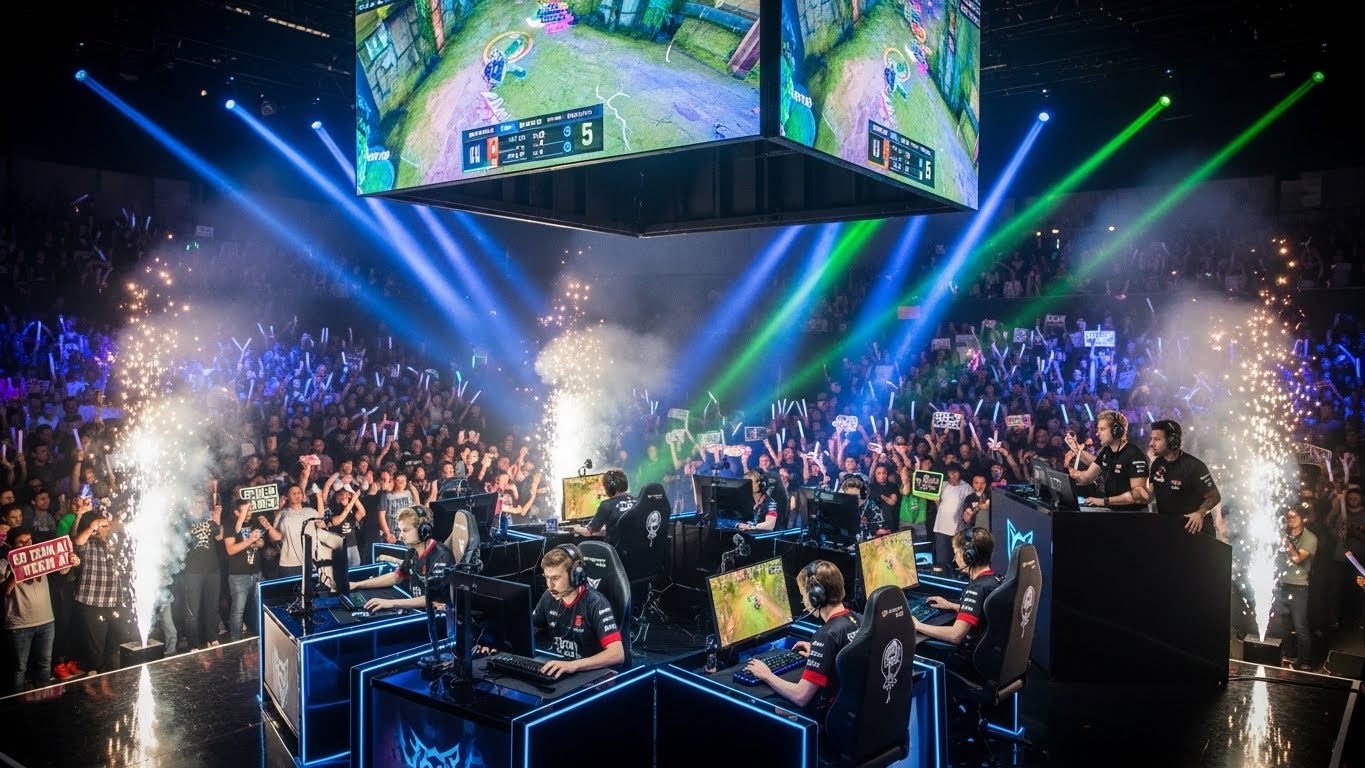
In the age of the internet, where digital connectivity and gaming culture intersect, esports has emerged as one of the most transformative and influential forces in the world of entertainment. What was once considered a niche hobby for a select few has now grown into a global industry worth billions of dollars, with millions of fans tuning in to watch players compete for supremacy in games like League of Legends, Dota 2, Counter-Strike: Global Offensive, and Fortnite. Today, esports is not just a hobby but a full-fledged competitive sport with a professional infrastructure, dedicated fans, and opportunities for players to earn fame and fortune.
Esports has reshaped how we think about gaming, competition, and entertainment. As we look toward its continued rise, it’s crucial to understand the journey of esports from its early days to its current state, and where it is headed in the future.
The Birth of Competitive Gaming: From Arcade to Online
While gaming itself dates back to the early days of arcade machines and home consoles, the idea of competitive gaming, or esports as we know it, began to take shape in the 1970s. The first instance of organized video game competition occurred in 1972 at Stanford University when a small tournament was held around the game Spacewar. While this event was small in scope and had limited reach, it was the seed that would eventually sprout into the esports industry.
However, it wasn’t until the late 1990s and early 2000s that esports began to gain traction in a more organized, structured way. This period saw the advent of more accessible personal computers, the rise of internet cafes, and the increasing popularity of games like StarCraft, Quake, and Warcraft III. Players could now engage in online multiplayer gaming, sparking the foundation of competitive tournaments and leagues.
The first large-scale esports tournament of note was the World Cyber Games (WCG), which debuted in 2000, and the Electronic Sports World Cup (ESWC), which followed in 2003. These tournaments attracted players from all over the world and set the stage for esports to become a true global spectacle.
The Rise of Esports: 2000s and the Golden Age
As the 2000s progressed, esports began to evolve into a more structured industry, moving beyond just a hobby into a professional sphere. The advent of high-speed internet and gaming platforms allowed players from around the world to compete against each other online, breaking down geographical barriers and expanding the player base. Games like Counter-Strike, Warcraft III, and StarCraft became the backbone of competitive gaming during this period.
The formation of organized esports leagues and tournaments was a significant turning point. The StarCraft scene in South Korea, for instance, helped shape the future of esports, and by the mid-2000s, South Korea became the epicenter of competitive gaming. It was in this period that esports organizations such as the Korean e-Sports Association (KeSPA) were established, creating a formal structure for professional players and teams.
In 2009, League of Legends was released by Riot Games, which quickly became a massive title in the esports world. The competitive scene surrounding League of Legends grew exponentially, and by 2011, the League of Legends World Championship took place, marking a significant milestone in the esports landscape.
At the same time, streaming platforms like Twitch were emerging as a way for fans to watch their favorite players and teams in action. Launched in 2011, Twitch transformed how esports was consumed, giving players a platform to broadcast their gameplay to a global audience. This real-time connection between players and fans began to foster the creation of esports communities and fueled the growth of the industry.
The Explosion of Esports: 2010s and the Mainstream
By the early 2010s, esports had firmly entrenched itself as a global phenomenon. Titles like Dota 2, Overwatch, Counter-Strike: Global Offensive, and Fortnite emerged, further broadening the competitive gaming ecosystem. Tournaments began to feature larger prize pools, more teams, and a wider range of games. In fact, the prize pool for The International, Dota 2‘s flagship tournament, surpassed $40 million in 2021, cementing the idea that competitive gaming could offer significant financial rewards.
The sheer size and scale of esports tournaments began to rival traditional sporting events. The League of Legends World Championship attracted millions of viewers annually, with the 2018 final reaching over 100 million unique viewers. Major tournaments were held in massive arenas, and events such as BlizzCon, ESL One, and DreamHack became annual staples in the esports calendar.
This era also saw the emergence of major esports teams and organizations. Teams like Team Liquid, Cloud9, Fnatic, and FaZe Clan became household names in the esports world, signing high-profile players and engaging in long-term team-building and sponsorship deals. The structure of these organizations began to resemble traditional sports teams, with coaches, analysts, and even psychologists supporting players to achieve peak performance.
What truly set this era apart, however, was the rise of esports as a spectator sport. Fans no longer just played the games; they watched others play them at the highest level of competition. The evolution of online streaming platforms like Twitch made it possible for fans to watch matches in real-time, comment on them, and interact with players and other fans via social media. This virtual community aspect fueled the growth of esports in ways traditional sports could never replicate.
Esports as a Career: The Professionalization of Gaming
As esports continued to grow, it began to be recognized as a legitimate career path for many. Professional players now earned significant salaries, not only from tournament prize pools but also through sponsorships, streaming, and endorsements. In fact, some top-tier esports athletes earned millions of dollars annually, surpassing the earnings of athletes in traditional sports like baseball and soccer.
The professionalization of esports was also evident in the increasing number of formal leagues and competitive circuits. Games like Overwatch, League of Legends, and Call of Duty established their own dedicated professional leagues, where teams and players competed for millions of dollars in prize money, with regular seasons and playoffs.
Esports teams began to invest heavily in player development, hiring coaches, analysts, and management staff to guide their players toward victory. This approach mirrored the way traditional sports teams invest in player development, scouting, and team building. As a result, many esports organizations now function like traditional sports franchises, with a keen focus on recruitment, training, and the mental well-being of their players.
The rise of esports influencers and streamers also contributed to the professionalization of the industry. Top streamers such as Ninja, Shroud, and Pokimane turned their gaming skills into lucrative careers, attracting sponsorships and partnerships with major brands. These influencers helped bridge the gap between gamers and mainstream audiences, making esports more appealing to a broader demographic.
The Global Appeal of Esports: An International Community
One of the most unique aspects of esports is its global appeal. Unlike traditional sports, which are often restricted by regional boundaries, esports transcends geographic and cultural lines. Players and fans from all corners of the globe can come together to compete, watch, and celebrate their shared passion for gaming.
Esports tournaments are held across the world, from Seoul to Los Angeles to Stockholm, drawing in players and fans from all walks of life. The rise of platforms like Twitch and YouTube has allowed fans to watch live streams of their favorite games and tournaments in any time zone, further expanding the reach of esports.
Countries like South Korea, China, and the United States have become powerhouses in the esports ecosystem, but emerging markets in Southeast Asia, Europe, and Latin America are also rapidly catching up. The global nature of esports has fostered a truly international community, where players, teams, and fans are united by their love of competitive gaming.
Esports and Traditional Sports: The Convergence of Two Worlds
As esports has grown in prominence, many traditional sports organizations have started to recognize its value. From sponsorships to partnerships, the crossover between traditional sports and esports is becoming more and more apparent. The NBA, for example, launched its own esports league, the NBA 2K League, while European football clubs like Manchester City and Paris Saint-Germain have invested in esports teams and events.
The integration of esports into the mainstream sporting world further legitimizes its place in the global entertainment landscape. It also opens up new opportunities for athletes, sponsors, and fans alike. For instance, esports has been included in major international events like the Asian Games, and there have even been discussions about including esports in the Olympic Games, a sign that esports is becoming an increasingly important part of the global sporting scene.
The Future of Esports: What’s Next?
As we look to the future, it’s clear that esports is poised for continued growth. The global esports market is expected to surpass $1.5 billion by 2028, with more games, leagues, and players entering the space. The continued rise of mobile gaming, VR, and AR technologies also promises to revolutionize the way esports is played and consumed.
Esports will likely continue to diversify, with new genres of games attracting players and fans. The integration of virtual reality and augmented reality could make esports even more immersive, creating new opportunities for competition and entertainment. Additionally, the continued investment in esports infrastructure, including dedicated arenas, training centers, and production studios, will help to professionalize the industry further.
Conclusion
Esports has come a long way since its humble beginnings, evolving into a global industry that blends gaming, competition, and entertainment. It has transformed from a subculture into a legitimate sport, with professional players, teams, and leagues making up a thriving