
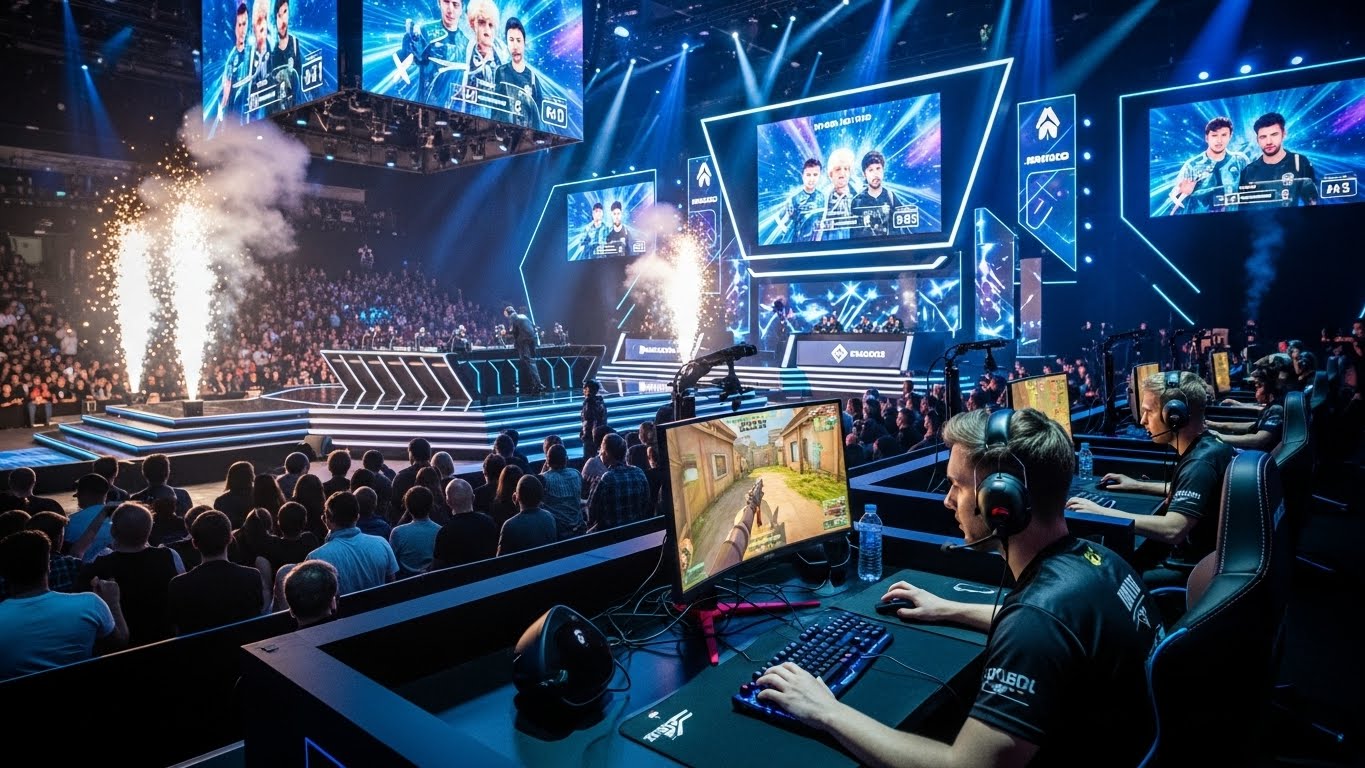
In the span of just a few decades, the world of competitive video gaming, known as esports, has transformed from a niche hobby into a global phenomenon. Today, esports is not only a multi-billion-dollar industry but also a cultural force that transcends borders and connects millions of people worldwide. What was once a pastime for a select few has become a legitimate career option for many, with professional players, teams, and organizations making a name for themselves on the world stage. This blog post explores the rise of esports, its growth, and the profound impact it has had on the entertainment industry, culture, and society at large.
What is Esports?
Esports refers to organized, multiplayer video game competitions, particularly between professional players, individually or as teams. These competitions can be held online or at physical venues, with players vying for cash prizes, sponsorships, and titles. While competitive gaming has been around since the 1970s, esports as we know it today began to gain traction in the late 1990s and early 2000s, with games like StarCraft, Quake, and Counter-Strike leading the charge.
The key to esports’ success lies in its accessibility. Unlike traditional sports that require physical infrastructure, esports players only need a computer or console and a stable internet connection to compete. This democratization of gaming has played a significant role in esports’ rise, allowing players from all over the world to participate and follow tournaments with ease.
The Growth of Esports: A Global Phenomenon
Esports has experienced explosive growth in the past two decades, evolving from underground tournaments to high-profile events watched by millions of fans. What was once a subculture is now a global spectacle, attracting sponsorships from some of the biggest brands in the world, broadcasting deals with major networks, and a viewership that rivals traditional sports. According to estimates, the global esports market will exceed $1.5 billion by 2025, and its audience is expected to reach 646 million people by the same year.
Esports and the Emergence of Streaming
One of the driving forces behind the rise of esports has been the advent of streaming platforms like Twitch and YouTube Gaming. These platforms allow players to stream their gameplay to a global audience, enabling fans to watch live tournaments, follow their favorite players, and engage with the community in real-time. The accessibility of streaming has made esports more visible and has helped cultivate a dedicated fan base that supports both players and teams.
For professional gamers, streaming has become a major source of income. Streamers earn money through ads, donations, and sponsorships, allowing some to turn gaming into a full-time career. In fact, top-tier streamers can make millions of dollars annually, and their popularity has often eclipsed that of traditional sports stars. The ability to interact with fans directly via chat rooms and social media platforms has also helped build a sense of community and foster loyalty among viewers.
Sponsorships and Investments
As esports has grown, so has its appeal to major corporations. Brands such as Coca-Cola, Intel, Red Bull, and Adidas have all invested heavily in esports, sponsoring tournaments, teams, and events. These sponsorships have injected millions of dollars into the industry, which in turn has helped elevate the status of esports. Just like traditional sports, esports players and teams have signed multi-million-dollar endorsement deals, with players becoming household names in the gaming community.
Esports also has the backing of significant investors. Companies such as Tencent and Google have made strategic investments in esports organizations and leagues, pushing the industry to the forefront of digital entertainment. In 2021, Tencent purchased a majority stake in Riot Games, the developer behind League of Legends, further solidifying its commitment to the future of esports.
The Impact of Esports on Traditional Sports
One of the most fascinating aspects of esports is its relationship with traditional sports. While there are distinct differences between the two—such as physicality versus strategy—esports shares several characteristics with traditional sports, including intense competition, professional teams, and a global fanbase.
Esports as a Career Path
In the past, being a professional athlete was the only viable career path in the world of competitive sports. Today, esports has opened up a similar path for those who excel at video games. Competitive gamers can now sign professional contracts, compete in high-stakes tournaments, and earn substantial prize money. The top players in games like Dota 2, Counter-Strike, League of Legends, and Fortnite can make millions of dollars annually, a sum that rivals the earnings of traditional sports stars in basketball, football, and soccer.
Moreover, esports provides an avenue for individuals who may not excel in traditional sports but possess incredible reflexes, strategic thinking, and mental acuity. In many ways, esports has created a new breed of athlete, one who thrives on quick decision-making, precision, and teamwork—all of which are crucial in the competitive gaming landscape.
Traditional Sports Organizations Embrace Esports
As esports has grown, it has caught the attention of traditional sports leagues and organizations. Many sports teams, including those in the NBA, NFL, and Premier League, have ventured into the world of esports, either by creating their own esports divisions or by sponsoring existing teams. For example, the NBA 2K League allows players to compete in the popular NBA 2K video game, creating a bridge between the digital and physical worlds of sports.
Esports is also influencing the way traditional sports are consumed. Just as fans of NFL or NBA games gather in front of their TVs, esports fans now tune into streaming platforms to watch live competitions. The level of engagement in esports is often more interactive than traditional sports, as viewers can chat with players, vote on in-game decisions, or even influence the outcome of a match in real-time.
Esports and Culture: A New Wave of Entertainment
Esports’ growth is also a reflection of broader cultural shifts. The internet has given rise to an entirely new form of entertainment that caters to the interests and preferences of a digital-native generation. Esports, like streaming, podcasts, and influencer culture, is part of a larger movement where online communities and digital experiences take center stage.
Creating Communities
One of the most significant cultural impacts of esports has been its ability to create and nurture communities. Online multiplayer games and streaming platforms have allowed people from all over the world to connect with others who share similar interests. These communities are not only based on the love of a particular game but also on the relationships forged through competition and shared experiences. Esports has helped gamers find a sense of belonging, with fans and players building relationships that transcend the digital space.
Moreover, esports events and tournaments are often held in massive arenas, where fans gather to watch the action live. These events have become a cultural experience in their own right, with cosplay, live music, and fan interactions creating a carnival-like atmosphere. Major tournaments like The International (Dota 2), League of Legends World Championship, and Overwatch League Grand Finals now attract thousands of spectators both online and offline, contributing to the cultural acceptance of esports.
Esports and Diversity
Another major cultural shift brought about by esports is its inclusivity. Traditional sports have historically been dominated by certain demographics, particularly in terms of gender and race. However, esports has become a platform where players from diverse backgrounds, regardless of gender, race, or nationality, can excel based purely on their skill. This has made esports a more inclusive space for underrepresented groups, particularly women and minorities, who have historically had fewer opportunities in traditional sports.
For example, there has been a notable rise in female esports players, content creators, and commentators. Organizations like Women in Games and initiatives like the Female Esports League are helping to provide opportunities for women in esports, creating a more equitable environment in what was once considered a male-dominated space.
The Future of Esports
The future of esports appears bright, with rapid technological advancements and the continued popularity of digital entertainment paving the way for further growth. Virtual reality (VR) and augmented reality (AR) technologies are already beginning to influence how esports is played and consumed. As these technologies improve, we can expect esports to become even more immersive, with fans able to watch tournaments in 360 degrees or interact with players in new and exciting ways.
The expansion of mobile gaming also presents new opportunities for esports. With the rise of mobile games such as PUBG Mobile, Clash Royale, and Free Fire, esports is no longer confined to PC and console gaming. Mobile esports tournaments are growing in popularity, particularly in regions like Southeast Asia and India, where mobile gaming is the dominant platform.
Additionally, as more educational institutions begin to offer scholarships and esports programs, we are likely to see a new generation of players emerge from the academic world. Colleges and universities are recognizing the potential of esports to foster teamwork, problem-solving, and leadership skills, making esports a viable career path for many young people.
Conclusion
Esports is no longer a passing trend. It has become a global powerhouse that continues to shape the future of entertainment, culture, and competition. With its growing viewership, substantial financial backing, and increasing cultural relevance, esports is well on its way to becoming as integral to the entertainment landscape as traditional sports. As technology evolves and the industry continues to mature, esports will undoubtedly remain a significant force in both digital and offline communities around the world.
For those who were once skeptical about the future of esports, the evidence is clear: this digital revolution is just getting started. Whether you’re a gamer, a fan, or simply someone looking to understand what’s next in entertainment, esports is here to stay, and it’s only going to get bigger and better in the years to come.