
Introduction
Over the past two decades, the term Esports has transformed from a niche subculture to a billion-dollar global phenomenon. What was once a casual pastime of playing video games for fun has evolved into a legitimate and organized form of competition, complete with professional players, coaches, massive arenas, and millions of passionate fans. Esports has broken barriers between technology, entertainment, and sportsmanship, creating a unique cultural movement that resonates with people across generations. It has redefined how the world perceives gaming, turning virtual battles into real-world opportunities.
The Origins of Esports
To understand the current explosion of Esports, we must first explore its humble beginnings. The earliest forms of competitive gaming can be traced back to the 1970s, when arcade games like Space Invaders and Pac-Man dominated entertainment centers. In 1980, Atari held one of the first large-scale gaming competitions, the Space Invaders Championship, which attracted thousands of participants across the United States. Although primitive by today’s standards, it marked the first instance where gaming was treated as a competitive spectacle.
During the 1990s, as computers and consoles became more advanced, competitive gaming found a new home online. Titles like Doom, StarCraft, and Quake introduced multiplayer modes that allowed players from around the world to challenge one another. This period also saw the rise of gaming communities, internet cafés, and online tournaments. South Korea, in particular, became a hotspot for competitive gaming due to its rapid internet infrastructure growth. The Korean Esports Association (KeSPA) was later formed, making South Korea one of the pioneers in formalizing Esports as a professional industry.
The Evolution of Esports in the 21st Century
The 2000s marked a turning point in the history of Esports. With the rise of high-speed internet and the emergence of streaming platforms, gaming became more accessible and interactive. Titles such as Counter-Strike, Warcraft III, Dota, and Halo became central to competitive play. Local tournaments turned into international championships with lucrative prize pools. The accessibility of digital platforms meant that fans could watch live matches, support their favorite teams, and even interact with players in real-time.
As technology advanced, the organization and professionalism of Esports grew exponentially. Major tournaments like The International (for Dota 2), League of Legends World Championship, and Fortnite World Cup attracted millions of viewers globally. Prize money reached unprecedented levels, with some players earning more than traditional athletes. The world began recognizing Esports not just as entertainment but as a legitimate career path.
Popular Esports Titles That Shaped the Industry
The diversity of Esports games is one of its greatest strengths. Each title offers a unique experience, catering to different audiences and skill sets.
League of Legends: A multiplayer online battle arena (MOBA) game that became a cornerstone of modern Esports. It demands strategy, teamwork, and split-second decision-making. The annual World Championship draws massive crowds and millions of online viewers.
Dota 2: Known for its complexity and depth, Dota 2 has one of the largest prize pools in Esports history. The International, its flagship event, showcases the game’s global appeal and intense competitive nature.
Counter-Strike: Global Offensive: This tactical first-person shooter emphasizes teamwork, communication, and precision. It remains one of the longest-standing and most respected Esports titles in history.
Fortnite: Combining creative building mechanics with battle royale gameplay, Fortnite redefined how competitive gaming could blend fun, creativity, and competition. Its youthful player base and pop culture collaborations made it a global sensation.
Overwatch, Valorant, Call of Duty, and PUBG: These games continue to attract competitive players worldwide. Each has its own professional circuits, fan communities, and ecosystems that contribute to Esports’ global dominance.
Esports and the Rise of Streaming Platforms
The success of Esports is closely tied to the rise of live-streaming platforms. Before platforms like Twitch and YouTube Gaming, watching competitive gaming required either physical attendance at events or accessing limited broadcast coverage. Today, streaming services allow millions to tune in to live tournaments, practice sessions, and player interactions with just a few clicks.
Streaming not only democratized access to Esports but also created new opportunities for players and content creators. Many professional gamers started as streamers who built audiences by showcasing their skills and personalities. This blend of entertainment and competition has blurred the lines between athlete, influencer, and entertainer.
The Economic Impact of Esports
Esports is not just about competition; it is a thriving economic ecosystem. The industry generates billions in revenue through sponsorships, merchandise, advertising, ticket sales, and media rights. Companies from all sectors—technology, beverage, apparel, and automotive—have invested heavily in Esports to reach younger audiences.
Professional teams now operate much like traditional sports organizations. They have dedicated coaches, analysts, nutritionists, and psychologists. Players sign contracts, receive salaries, and compete under the banners of major organizations. Sponsorship deals with global brands such as hardware manufacturers and energy drink companies have become commonplace, further legitimizing the industry.
Additionally, Esports has created jobs beyond playing. Event organizers, broadcasters, casters, production crews, marketing specialists, and data analysts all play vital roles in keeping the industry running. Educational institutions have even started offering Esports management and game design programs, proving its academic and professional potential.
The Role of Esports Arenas and Live Events
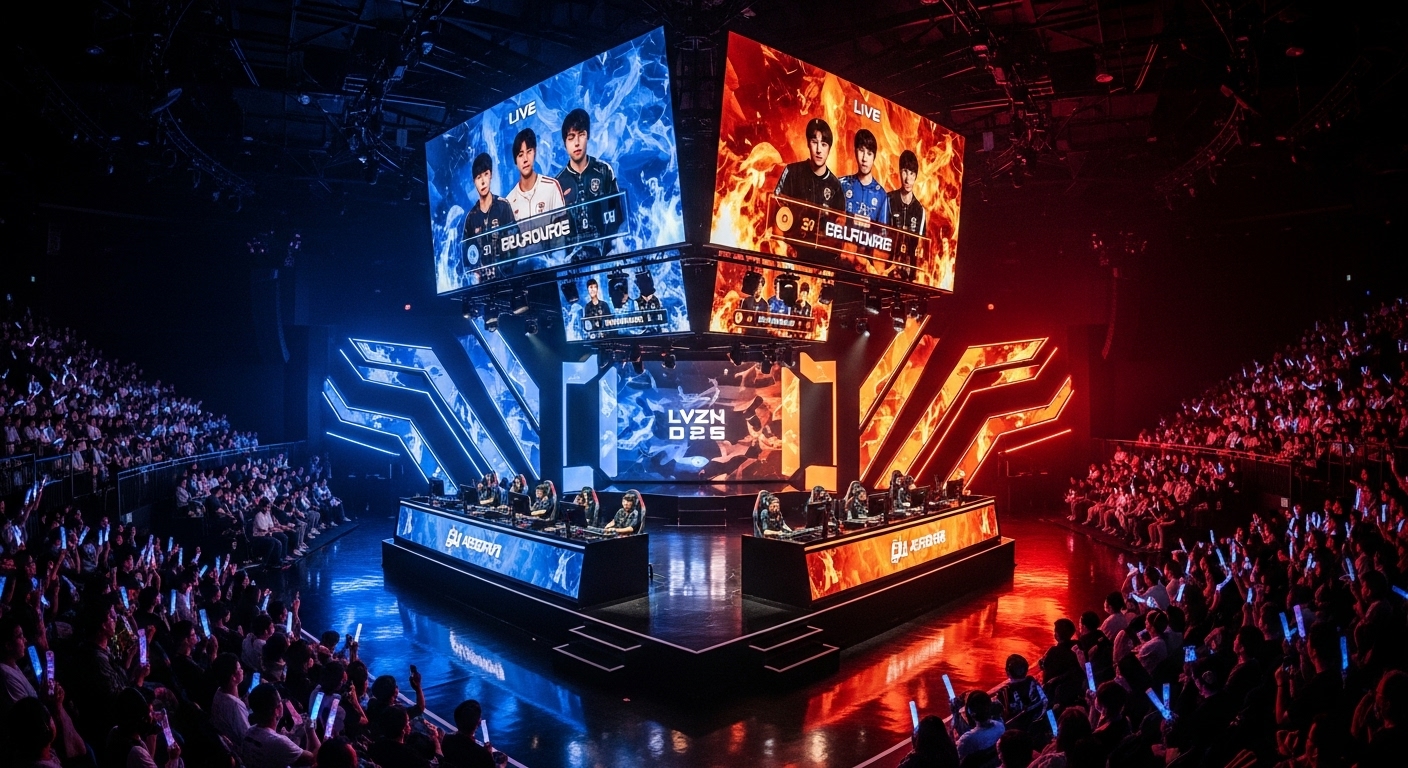
While much of Esports takes place online, live events bring a completely different level of excitement. The energy of thousands of fans cheering for their favorite teams in arenas mirrors the atmosphere of traditional sports. Major cities across the world host Esports tournaments that sell out stadiums.
Events such as the League of Legends World Championship and The International are not just gaming competitions—they are global spectacles. They feature live music performances, elaborate stage designs, and opening ceremonies that rival those of the Olympics. These live experiences create emotional connections between fans and players, reinforcing the cultural significance of Esports.
Esports as a Career Path
For many young gamers, Esports is more than a hobby; it is a dream career. The path to becoming a professional player, however, is rigorous. Players must dedicate thousands of hours to practice, improve communication, and adapt to evolving game strategies. The professional scene demands discipline, teamwork, and a deep understanding of the game’s mechanics.
Beyond playing, there are numerous career opportunities within the industry. Casters provide live commentary and analysis, turning games into engaging spectacles. Coaches help players refine strategies, while analysts break down performance data. Content creators and streamers build personal brands that often rival professional players in popularity.
Esports journalism, event production, and marketing have also emerged as viable professions. With the expansion of Esports into education, many universities now provide scholarships and degrees focused on game design, Esports management, and broadcasting. This has given legitimacy to gaming as a sustainable career choice.
The Global Community and Cultural Impact
Esports is one of the few forms of entertainment that transcends cultural and linguistic barriers. Players from different countries compete on the same stage, communicating through the universal language of gameplay. The sense of global community it fosters is unparalleled.
Fan communities are vibrant and dedicated. Online forums, fan art, cosplay, and live chat discussions create a participatory culture that extends far beyond the matches themselves. Esports has also become a tool for social connection, allowing people to make friends across borders.
In regions like Asia, North America, and Europe, Esports has become deeply ingrained in youth culture. Governments in several countries have recognized it as an official sport, hosting national tournaments and supporting infrastructure development. Esports has also influenced music, fashion, and entertainment industries, becoming a central pillar of digital culture.
Challenges Facing the Esports Industry
Despite its success, Esports faces several challenges that need to be addressed for sustainable growth. One of the biggest issues is player burnout. The intense training schedules, travel demands, and constant competition can take a toll on mental and physical health. Many players retire early due to stress and exhaustion.
Another concern is the lack of standardized regulations. Unlike traditional sports governed by established organizations, Esports consists of multiple games, each controlled by its own publisher. This fragmentation can lead to inconsistencies in rules, player contracts, and tournament structures.
Toxicity and online harassment are also persistent problems. Competitive gaming communities can sometimes foster negative behavior, and addressing these issues requires collaborative efforts between developers, organizations, and fans.
Furthermore, as Esports grows, maintaining competitive integrity is vital. Match-fixing, cheating, and illegal betting have occasionally tarnished the industry’s image. However, advancements in technology and stricter oversight are helping ensure fairness and transparency.
Esports and Education
The integration of Esports into education has opened exciting possibilities. Schools and universities are now embracing Esports as a means of teaching teamwork, leadership, and strategic thinking. Competitive gaming clubs and varsity Esports programs have become common in educational institutions worldwide.
These programs not only foster gaming talent but also prepare students for careers in the digital economy. Skills learned in Esports—such as communication, problem-solving, and adaptability—are applicable across industries. Educational Esports also promote inclusivity, offering opportunities for students who might not be interested in traditional sports to participate in team-based activities.
The Future of Esports
The future of Esports looks promising and limitless. As technology continues to evolve, virtual reality, augmented reality, and artificial intelligence will likely play significant roles in shaping next-generation competitions. The lines between physical and digital sports may blur further, creating hybrid experiences that appeal to both gamers and non-gamers alike.
Esports is also expected to feature prominently in mainstream entertainment, with television networks and streaming services producing documentaries, dramas, and reality shows centered on gaming culture. As global investment increases, more countries will develop infrastructure for Esports training and development.
There is also growing speculation about Esports being included in future Olympic Games. While debates continue about whether gaming qualifies as a traditional sport, the undeniable skill, strategy, and fan engagement make it a strong contender for international recognition.
Conclusion
Esports is no longer just about playing video games; it is about passion, skill, innovation, and community. It represents a cultural shift in how people interact with entertainment and technology. From humble beginnings in arcades to grand international stages, Esports has become a powerful symbol of the digital age.
As the industry continues to grow, its influence will reach even greater heights—shaping careers, inspiring creativity, and uniting millions around the world. Whether you are a player, a fan, or simply an observer, Esports stands as proof that competition, when fueled by technology and imagination, has the power to redefine what it means to be an athlete in the modern world.
Word Count: ~2,170