
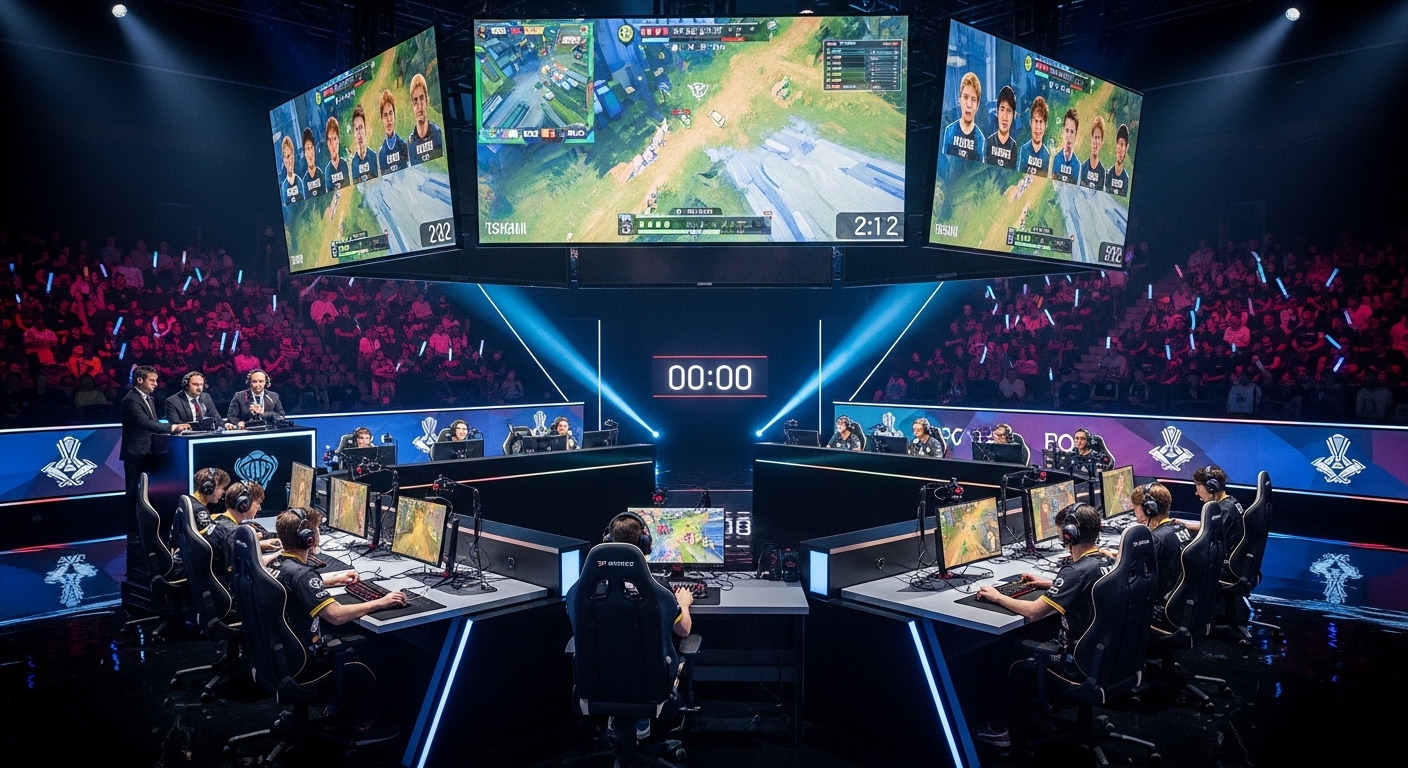
Esports, a term that once seemed niche, has grown into a global phenomenon, transforming from casual competitions to multimillion-dollar industries. With its rapid growth over the past two decades, esports has reshaped the world of sports, gaming, and entertainment. From grassroots tournaments to sold-out arenas, esports now rivals traditional sports in terms of viewership and revenue. This blog post will delve into the history, development, current state, and future of esports, exploring its impact on society, culture, and the entertainment industry.
The Birth of Esports: The Early Days
The origins of esports can be traced back to the early days of video gaming. In the 1970s and 1980s, gaming was a recreational activity, and competitive gaming was largely an afterthought. However, as gaming technology progressed, so too did the desire to compete. The first recorded video game competition took place in 1972 at Stanford University, where students competed in a Spacewar! tournament. The winner received a year’s subscription to Rolling Stone magazine, highlighting how humble the beginnings of competitive gaming were.
The 1990s saw the rise of arcade games like Street Fighter and Tekken, which provided a foundation for the first real esports tournaments. These tournaments were often localized, small-scale events, but they gave players the opportunity to test their skills against others and laid the groundwork for the future of competitive gaming.
In the late 1990s, the rise of the internet and PC gaming marked the beginning of esports as we know it today. Games like Quake and StarCraft ushered in the era of online competitions. Players could now compete against each other remotely, and online tournaments began to emerge. The creation of gaming leagues such as the World Cyber Games (WCG) in 2000 and The Electronic Sports World Cup (ESWC) in 2003 marked important milestones in the development of esports as a formalized industry.
The Rise of Esports in the 2000s
The 2000s were pivotal years in the development of esports. With the explosion of internet cafes and the rise of broadband internet, gamers from around the world could connect and compete with each other from the comfort of their own homes. This shift made esports more accessible and helped build an international fanbase.
The early 2000s saw the rise of iconic games that would become staples in the esports scene. StarCraft: Brood War, released in 1998, became a dominant force in South Korea, where it laid the foundation for the esports infrastructure that would later flourish. In South Korea, gaming became not only a pastime but a cultural phenomenon. TV networks started broadcasting esports events, and gaming players became celebrities, receiving sponsorships and endorsement deals. The Korean e-Sports Association (KeSPA) was formed to regulate and promote esports, and the country became the global epicenter of esports.
Meanwhile, games like Counter-Strike, Warcraft III, and Halo began to dominate competitive gaming in the West. Tournaments such as the Cyberathlete Professional League (CPL) and the World Cyber Games (WCG) attracted international attention, with large prize pools and sponsorships from major companies. This period also saw the development of professional esports organizations, many of which are still active today.
The shift toward professionalization continued throughout the 2000s, with tournaments and leagues growing in size and prestige. Teams and players began to be sponsored by major companies, and prize pools for tournaments began to reach into the millions of dollars. Esports was no longer a fringe hobby for enthusiasts; it was becoming a legitimate career path for talented gamers.
The Explosion of Esports in the 2010s
The 2010s saw the esports industry explode in terms of viewership, sponsorships, and revenue. Major gaming publishers, such as Riot Games, Blizzard Entertainment, and Valve Corporation, began to invest heavily in esports, creating dedicated esports titles that were designed to be played at a competitive level. Games like League of Legends, Dota 2, Overwatch, and CS:GO became household names and helped bring esports to a wider audience.
One of the defining moments of esports in the 2010s was the launch of the League of Legends World Championship in 2011. The tournament, which brought together the best players from around the world, quickly became one of the most-watched esports events. By 2013, the League of Legends World Championship was held in the famous Los Angeles Staples Center, a venue typically reserved for traditional sports events. This was a major milestone in the growth of esports, as it showed that competitive gaming could fill large arenas and attract mainstream attention.
The 2010s also saw the rise of streaming platforms such as Twitch, which allowed esports events to be broadcast live to a global audience. Twitch, acquired by Amazon in 2014, became the go-to platform for gamers and esports fans to watch live competitions, interact with their favorite players, and discover new games and trends. The accessibility of streaming helped foster a sense of community among esports fans and players, further solidifying the industry’s position in the entertainment world.
The success of League of Legends was followed by other games like Dota 2, Counter-Strike: Global Offensive, and Hearthstone, each of which built its own dedicated esports scene. The prize pools for major tournaments continued to grow, with Dota 2’s International reaching an astronomical $25 million in 2018. The global appeal of esports was further cemented by the fact that these tournaments drew millions of viewers from across the world, with events streamed in multiple languages and time zones to accommodate fans worldwide.
In addition to the games themselves, esports organizations and teams also grew in prominence during the 2010s. Many esports teams were sponsored by major companies and even traditional sports franchises. Players became celebrities in their own right, with sponsorship deals, social media followings, and lucrative streaming contracts. The growth of esports also led to the creation of college scholarships and professional training programs, as well as dedicated esports arenas.
Esports in the Mainstream: The 2020s and Beyond
As esports entered the 2020s, its status as a mainstream form of entertainment was undeniable. With the COVID-19 pandemic forcing traditional sports leagues to pause, esports filled the void by providing fans with live competitive content. In 2020, the League of Legends World Championship set a new viewership record, attracting over 100 million viewers. Other esports events, such as The International and CS:GO Majors, also saw massive viewership numbers, demonstrating the growing global appeal of competitive gaming.
Esports continued to be broadcast on television, with networks such as ESPN and TBS airing live esports events. The rise of esports as a mainstream entertainment form was also reflected in its inclusion in events like the Asian Games, where esports made its debut as a medal event in 2018. This was seen as a major step toward the recognition of esports as an official sport, and discussions about its inclusion in the Olympics began to take place.
The growth of esports is also reflected in the increasing number of esports-themed video games, as well as the diversity of genres that have gained competitive scenes. While multiplayer online battle arenas (MOBAs) like League of Legends and Dota 2 continue to dominate the esports scene, battle royale games like Fortnite and PUBG have carved out their own competitive niches. Other games, such as FIFA, Rocket League, and Super Smash Bros., have also created thriving competitive ecosystems.
As esports continues to grow, so too does its impact on the entertainment industry. Major brands from outside the gaming world, such as Coca-Cola, Mercedes-Benz, and Nike, have begun sponsoring esports events and teams. Streaming platforms like YouTube Gaming and Facebook Gaming have emerged as competitors to Twitch, further fueling the expansion of esports. The investment in esports by venture capital firms and major corporations indicates that the industry is here to stay, and its potential for growth remains immense.
The Future of Esports: Opportunities and Challenges
Looking ahead, the future of esports is both exciting and uncertain. As the industry continues to grow, it faces a number of opportunities and challenges. One of the biggest opportunities is the expansion of esports into new regions, particularly in Africa and Southeast Asia, where gaming is becoming increasingly popular. These regions represent untapped markets with massive growth potential, both in terms of player participation and viewership.
Another opportunity lies in the continued integration of technology into esports. Virtual reality (VR), augmented reality (AR), and artificial intelligence (AI) have the potential to transform the way esports events are played, viewed, and experienced. These technologies could make esports more immersive and interactive, allowing fans to experience events in new and innovative ways.
However, the esports industry also faces challenges. One of the biggest hurdles is ensuring the sustainability and professionalism of the ecosystem. While top-tier players and organizations are thriving, there is a need to create a more stable infrastructure for lower-tier players and smaller tournaments. Additionally, issues such as player burnout, lack of mental health resources, and the balance between competition and entertainment need to be addressed.
Another challenge is the increasing competition from other forms of entertainment, particularly traditional sports and streaming platforms. As more people turn to esports for their entertainment, the industry will need to continue innovating and finding ways to keep fans engaged.
Conclusion
Esports has come a long way from its humble beginnings, evolving into a global industry that continues to grow at an exponential rate. What began as a niche activity for gamers has become a cultural force, with millions of fans around the world tuning in to watch their favorite players and teams compete. From grassroots tournaments to multimillion-dollar prize pools, esports has proven that it is not just a passing trend but a legitimate form of entertainment. The future of esports holds immense potential, with new technologies, markets, and opportunities on the horizon. While there are challenges to overcome, the esports industry’s impact on global entertainment and culture is undeniable.