
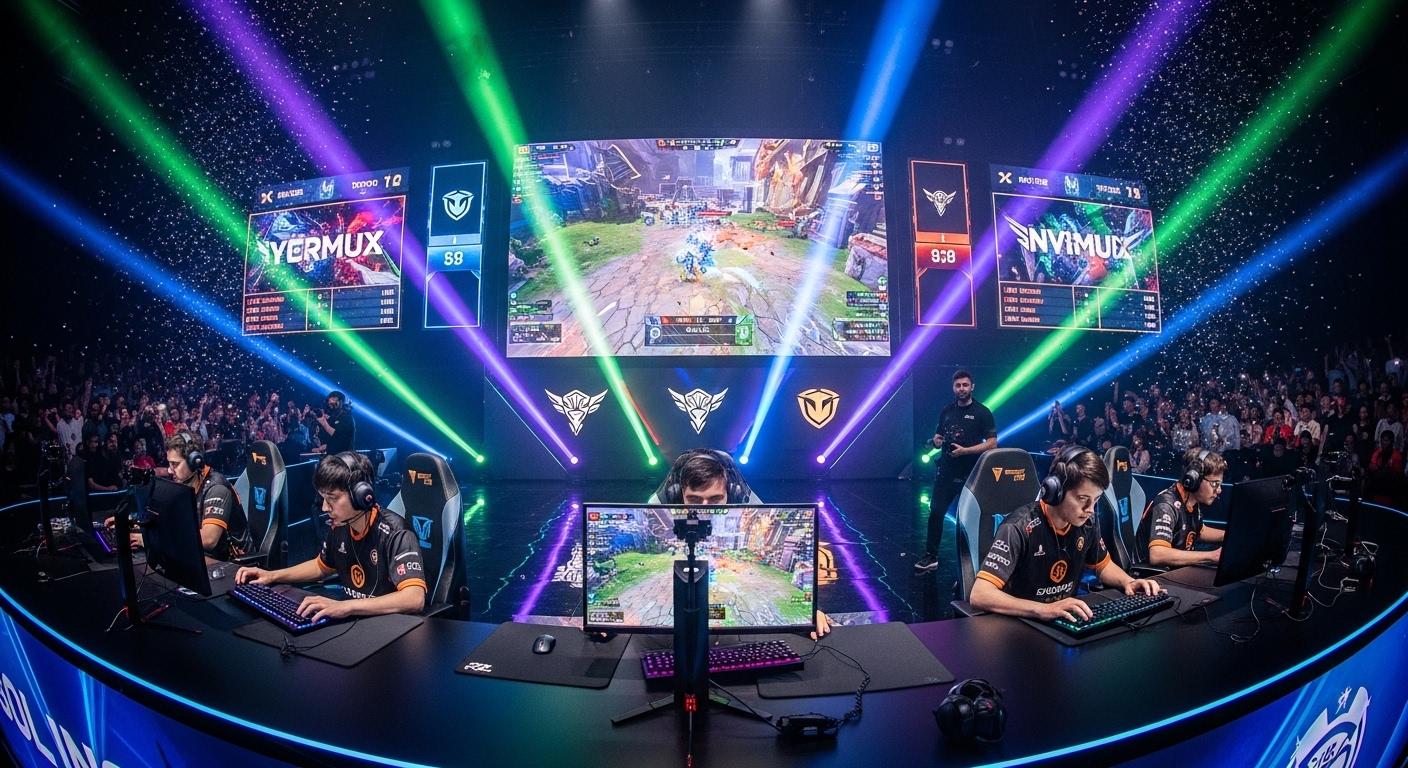
In the last two decades, esports has transformed from a small gathering of passionate gamers into a global entertainment industry rivaling traditional sports. Once dismissed as a mere pastime, competitive gaming has now become a billion-dollar industry supported by sponsors, stadiums filled with cheering fans, international tournaments, and professional athletes who dedicate their lives to virtual mastery. This transformation represents not only a shift in how society perceives gaming but also a broader change in how technology and culture intersect in the digital age.
The Origins of Esports
The story of esports begins long before the world had high-speed internet or powerful gaming PCs. The earliest competitive gaming events date back to the 1970s when the first known video game competition, the Space Invaders Championship, was held in 1980 by Atari. It drew over ten thousand participants, an astonishing number for its time. Even then, players competed not for massive cash prizes but for recognition and the sheer thrill of victory.
Throughout the 1980s and early 1990s, the culture of gaming competitions slowly evolved. Arcades became social hubs where players battled for high scores, and gaming magazines published leaderboards featuring the best players from around the world. These early contests laid the foundation for what would eventually become esports, though the term itself did not yet exist.
The true spark that ignited modern esports came in the late 1990s with the advent of online multiplayer games and the rise of PC gaming. Titles like Quake, StarCraft, and Counter-Strike created communities of players who could now compete over the internet rather than gathering physically. This connectivity revolutionized the landscape of gaming competition and gave birth to organized tournaments, online leagues, and the first professional teams.
The Early 2000s: The Birth of a New Era
The early 2000s marked a turning point for esports. Broadband internet became increasingly accessible, gaming hardware improved, and online gaming platforms became more sophisticated. South Korea played a particularly crucial role during this period. The country’s government invested heavily in internet infrastructure, and gaming quickly became a mainstream cultural phenomenon. Television networks began broadcasting matches of StarCraft, and professional gamers like Lim “BoxeR” Yo-hwan became national celebrities.
This era also witnessed the creation of the first professional gaming organizations and leagues, such as the Cyberathlete Professional League (CPL) and Major League Gaming (MLG). These platforms provided structured environments for players to compete, introducing regular seasons, rankings, and prize pools. The idea of gaming as a legitimate career began to take hold, though it was still far from universally accepted.
The Expansion of Competitive Titles
As esports matured, new genres of games began to emerge as competitive platforms. Real-time strategy (RTS) games like StarCraft and Warcraft III remained popular, but first-person shooters (FPS) and multiplayer online battle arenas (MOBAs) began to dominate. Counter-Strike became the face of competitive FPS gaming, while games like Dota and League of Legends ushered in the age of the MOBA.
The diversity of competitive games helped broaden the audience for esports. Some fans gravitated toward the fast-paced reflexes of shooters, while others appreciated the strategic depth and teamwork required in MOBAs. The evolution of these games also led to innovation in tournament formats, broadcast production, and spectator experiences.
By the late 2000s, esports had become a truly international affair. Major tournaments were being held in Europe, North America, and Asia, drawing audiences both in-person and online. Streaming technology, particularly platforms that allowed for live broadcasting of matches, became crucial in expanding viewership.
The Streaming Revolution
Perhaps the single most important technological development that propelled esports into mainstream culture was the rise of streaming platforms. Before streaming, watching esports required downloading replays or tuning into specialized broadcasts, often with limited accessibility. The launch of platforms dedicated to live streaming changed everything.
Suddenly, fans could watch their favorite players and teams compete live from anywhere in the world. This immediacy brought esports closer to the experience of traditional sports broadcasts. Commentators, analysts, and production teams elevated the presentation, making esports matches feel like grand spectacles rather than niche events.
Streaming also empowered individual players. Professional and amateur gamers alike could build personal brands by broadcasting their gameplay, interacting with audiences, and attracting sponsorships. This democratization of content creation blurred the lines between professional competition and entertainment. Some players gained fame not solely through tournament victories but through their charisma and ability to engage audiences.
The Professionalization of Esports
As audiences grew, so did the financial stakes. By the 2010s, esports had evolved into a serious business. Major corporations and investors recognized the potential of the industry, pouring millions of dollars into teams, leagues, and events. Traditional sports organizations began purchasing or founding their own esports teams, bridging the gap between the digital and physical sports worlds.
Professional teams began to resemble traditional sports franchises. Players signed contracts, trained under coaches, and followed rigorous practice schedules. Nutritionists, psychologists, and fitness trainers became part of the ecosystem to ensure players performed at their peak. The stigma surrounding gaming as a sedentary, unproductive activity started to fade as the discipline and professionalism of esports athletes became evident.
Prize pools also skyrocketed during this period. The International, the annual championship for Dota 2, became famous for its massive crowd-funded prize pools, reaching tens of millions of dollars. Such staggering sums brought global media attention and demonstrated that esports was not just a hobby but a lucrative career path.
The Cultural Acceptance of Esports
Cultural acceptance has been one of the most significant victories for esports. Once viewed skeptically by mainstream media, competitive gaming is now recognized as a legitimate form of entertainment and even as a potential Olympic event. Universities began offering esports scholarships, and high schools established varsity esports programs.
Esports players appeared on magazine covers, in documentaries, and on talk shows. Major arenas like Madison Square Garden and Staples Center hosted sold-out esports events, proving that gaming could fill the same venues as traditional sports. The audiences attending these events were diverse, energetic, and deeply engaged, reflecting a generational shift in how entertainment is consumed.
The fandom surrounding esports also mirrors that of traditional sports. Fans passionately support their favorite teams, follow player transfers, and debate strategies. Online forums and social media amplify discussions, memes, and rivalries. Esports has cultivated communities that transcend borders, languages, and cultures, united by a shared love of competition.
The Role of Technology in Esports Growth
Technology lies at the heart of esports. Without rapid advances in computing power, graphics rendering, and networking, the industry could not exist in its current form. Modern games are designed with competitive balance and spectator appeal in mind, ensuring that matches are both fair and visually engaging.
High refresh rate monitors, precise peripherals, and low-latency connections allow professional players to perform with pinpoint accuracy. Meanwhile, broadcasting tools and virtual camera systems create cinematic viewing experiences. Artificial intelligence and data analytics now play roles in performance evaluation, providing teams with insights into player behavior and strategy optimization.
Virtual and augmented reality are also beginning to influence the future of esports. Developers are experimenting with immersive spectator modes, allowing fans to experience matches from within the game world itself. As technology continues to evolve, so too will the ways audiences interact with and experience esports.
Esports as a Career Path
The rise of esports has created an entire ecosystem of careers beyond professional playing. Commentators, analysts, event organizers, coaches, content creators, and marketing specialists all contribute to the industry’s success. For every star player seen on stage, countless professionals work behind the scenes to ensure tournaments run smoothly.
Aspiring players now have clear paths to professionalism through ranked systems, amateur leagues, and academy programs. These structured environments mirror the development systems seen in traditional sports, offering mentorship and opportunities for growth.
However, the career of a professional player is often short-lived. The intense demands of competition, long practice hours, and rapid changes in game meta can lead to burnout. As a result, many players transition into coaching, streaming, or management after retirement. This cycle ensures that experience and expertise remain within the ecosystem.
The Economic Impact of Esports
Esports has become a significant economic force. Revenue streams come from sponsorships, media rights, ticket sales, merchandising, and in-game purchases related to esports events. Major brands have entered the space, recognizing the value of connecting with a young, tech-savvy audience.
Cities now compete to host major tournaments, recognizing the tourism and publicity such events bring. Economic studies show that esports events can generate millions in local revenue through hospitality, transportation, and marketing. Furthermore, esports has spurred the growth of related industries, including gaming hardware manufacturing, event production, and digital content creation.
The potential for continued growth remains immense. As global internet access expands and more people gain exposure to gaming, the audience for esports will likely continue to increase. Emerging markets in regions such as Southeast Asia, South America, and Africa are already showing strong engagement and investment in competitive gaming.
Esports and Traditional Sports: Convergence and Contrast
The relationship between esports and traditional sports is complex yet symbiotic. While they may seem worlds apart, they share many similarities in structure, discipline, and fan engagement. Both involve competition, teamwork, strategy, and the pursuit of excellence.
Traditional sports organizations have increasingly embraced esports as a way to connect with younger demographics. Several professional sports franchises have invested in or partnered with esports teams. For example, football clubs have created their own esports divisions, and basketball organizations have launched leagues based on virtual versions of their sport.
Yet, esports also challenges traditional notions of what constitutes an athlete or a sport. Physical exertion may be limited compared to running or jumping, but the mental demands, reflexes, and precision required at the highest levels are undeniable. As technology continues to redefine human competition, the boundaries between physical and digital sports will likely continue to blur.
The Social Impact of Esports
Esports has had a profound social impact, fostering communities and providing opportunities for individuals who may not have found belonging in traditional sports or other social structures. Online gaming transcends geography, allowing people from different backgrounds to collaborate and compete.
It has also opened new conversations about inclusivity and diversity. Although esports has faced criticism for gender imbalance and toxicity within communities, there are growing efforts to promote inclusivity. Organizations and tournaments dedicated to supporting female players, LGBTQ+ participants, and players with disabilities have emerged, signaling a more inclusive future.
Furthermore, esports has proven to be a platform for education and personal development. Many young people have learned teamwork, communication, and leadership skills through gaming. Educational institutions now incorporate esports into their programs not only as a competitive activity but also as a tool for teaching business, technology, and media skills.
Challenges Facing Esports
Despite its success, esports faces significant challenges. Player burnout, unstable career longevity, and the rapid evolution of games can make sustainability difficult. Unlike traditional sports with established governing bodies and standardized rules, esports is fragmented across multiple publishers, each controlling their own titles and ecosystems.
The lack of universal regulation leads to inconsistencies in player rights, tournament standards, and revenue sharing. Issues such as match-fixing, cheating, and doping have also emerged, prompting the creation of regulatory organizations aimed at maintaining integrity.
Another major concern is the mental and physical health of players. The pressure to perform at elite levels often results in long hours of practice, leading to stress and repetitive strain injuries. Teams and leagues are increasingly prioritizing wellness programs to address these issues, but the fast-paced nature of the industry makes balance difficult to maintain.
The Future of Esports
Looking ahead, esports shows no sign of slowing down. Its integration with emerging technologies such as virtual reality, blockchain, and artificial intelligence promises to create new experiences for players and fans alike. Hybrid tournaments that blend digital and physical environments may redefine what competition looks like in the future.
As generational attitudes toward gaming continue to shift, esports could become a core pillar of global entertainment. Educational systems will likely continue embracing it, and governments may recognize its economic and cultural value more formally. Discussions about including esports in the Olympic Games reflect its growing legitimacy and influence.
Moreover, the ongoing convergence of gaming and mainstream media means that esports will continue to blur lines between entertainment formats. Interactive viewing experiences, real-time audience participation, and crossovers with film, music, and fashion industries are already happening and will only deepen in the years to come.
Conclusion
From dimly lit arcades to massive international arenas, the journey of esports is one of passion, innovation, and perseverance. What began as a hobby for a small group of enthusiasts has become a global industry that captivates millions. Its growth mirrors the digital transformation of society itself, where technology enables new forms of connection, competition, and creativity.
Esports is more than just gaming; it is a cultural revolution that reflects the changing nature of human interaction and entertainment. As it continues to evolve, one thing is certain: the world will keep watching, competing, and celebrating the limitless possibilities that esports represents.