
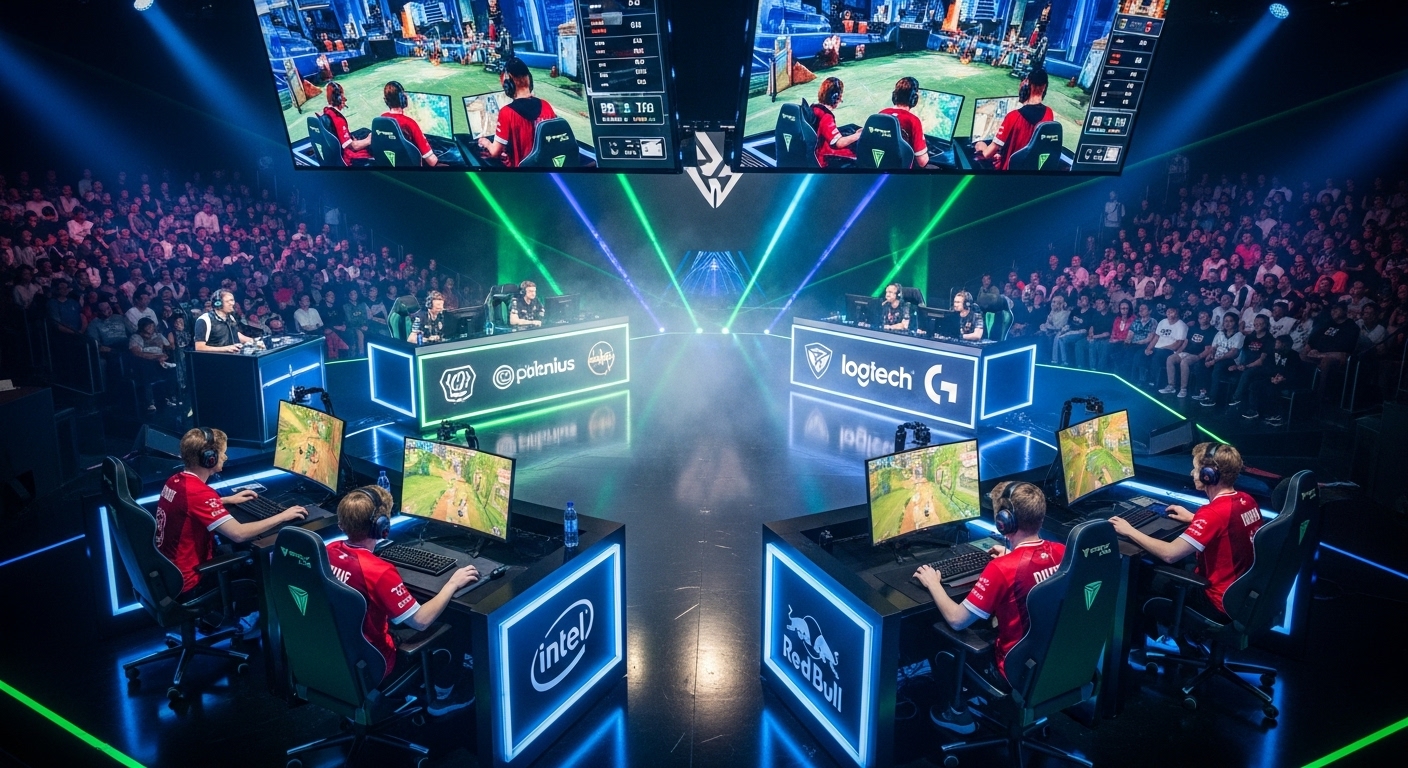
In recent years, esports has exploded into a multi-billion-dollar industry, capturing the attention of gamers, investors, and fans around the world. Once seen as a niche pastime for a small group of enthusiasts, esports has now become a global cultural phenomenon with professional leagues, massive tournaments, and a rapidly growing audience. From online streaming platforms like Twitch to live broadcast networks and even mainstream media coverage, esports has found its place in the entertainment landscape. But what exactly is esports, and how did it go from a basement hobby to a legitimate industry? In this blog, we will explore the rise of esports, its impact on gaming culture, the business of competitive gaming, and the future of this ever-evolving industry.
What is Esports?
Esports, short for “electronic sports,” refers to competitive video gaming at a professional level. Esports players, like athletes in traditional sports, compete against each other in organized tournaments, often with substantial cash prizes on the line. These tournaments are typically broadcasted on various platforms and attract millions of viewers worldwide. The games played in esports competitions vary, but the most popular titles tend to be multiplayer online battle arena (MOBA) games like League of Legends, first-person shooters (FPS) like Counter-Strike: Global Offensive and Overwatch, and battle royale games like Fortnite and PUBG.
What makes esports unique is the level of competition and skill involved. Professional esports players train just as rigorously as athletes in traditional sports, dedicating hours to perfecting their gameplay and strategies. They are often part of teams, with coaches and analysts, and compete in high-stakes tournaments for recognition, sponsorships, and cash rewards. The appeal of esports goes beyond just playing games; it’s about the spectacle, the community, and the excitement that comes with watching the best players in the world compete for glory.
The History of Esports: From Arcades to Global Tournaments
Esports didn’t emerge overnight. The foundation of competitive gaming can be traced back to the early days of arcade gaming in the 1970s and 1980s, when players competed for high scores on games like Space Invaders, Pac-Man, and Donkey Kong. These early competitions were simple, but they laid the groundwork for what would eventually become the global esports industry.
The true birth of modern esports began in the 1990s, as the internet became more widely accessible, and multiplayer games started to gain traction. Games like Warcraft and Quake allowed players to connect online and face off in virtual arenas. In 1997, the first major esports tournament, the Red Annihilation tournament for Quake, was held, attracting hundreds of players and viewers. This marked the beginning of a new era for competitive gaming.
In the early 2000s, online platforms like Battle.net (created by Blizzard Entertainment) and GameSpy allowed for more organized online tournaments. The rise of games like StarCraft, Counter-Strike, and Warcraft III cemented esports as a competitive pursuit, particularly in countries like South Korea, where StarCraft became a national obsession and esports began to receive mainstream recognition. The launch of professional leagues, such as the World Cyber Games (WCG) and Electronic Sports World Cup (ESWC), in the early 2000s further solidified the legitimacy of competitive gaming on the global stage.
Esports in the Mainstream: The Explosion of Digital Streaming
One of the key factors behind the meteoric rise of esports in recent years has been the growth of digital streaming platforms, particularly Twitch. Launched in 2011, Twitch quickly became the go-to platform for live streaming gaming content. It allowed fans to watch their favorite players, teams, and games in real time, while also providing a way for streamers to monetize their content through subscriptions, donations, and sponsorships.
Twitch, owned by Amazon, revolutionized the way esports events were consumed. No longer did fans need to watch tournaments on traditional television or rely on fragmented, often low-quality online streams. Instead, they could tune into a dedicated platform with high-definition broadcasts, live commentary, and interactive features like chat and real-time viewer participation. Twitch helped bring esports to a wider audience, providing a platform for players to showcase their skills and for fans to engage with their favorite teams and players.
Beyond Twitch, other platforms like YouTube, Facebook Gaming, and Mixer (before its shutdown in 2020) have also played key roles in bringing esports to mainstream audiences. Major esports tournaments like The International (Dota 2), League of Legends World Championship, and Fortnite World Cup now attract millions of viewers online, with some events being broadcasted on traditional TV networks and even cable channels.
The Business of Esports: A Multi-Billion Dollar Industry
As esports grew in popularity, so did the money involved. Today, the esports industry is worth billions of dollars, and it’s only continuing to grow. According to Newzoo, a leading gaming and esports analytics firm, the global esports industry was projected to generate over $1.1 billion in revenue in 2023, with that number expected to continue to rise in the coming years.
One of the primary revenue streams for esports is sponsorships. Brands across industries, from tech and gaming to consumer goods and energy drinks, are eager to sponsor esports teams, tournaments, and events. Major companies like Coca-Cola, Intel, and Red Bull have all made significant investments in the esports space, and their logos can be seen on team jerseys, event banners, and even in-game product placements.
Media rights are another important revenue source. Major tournaments and leagues like League of Legends, Dota 2, and Overwatch League have lucrative media deals that allow them to broadcast their events globally. These deals are typically worth millions of dollars, further elevating esports to the level of traditional sports.
In addition to sponsorships and media rights, esports organizations also make money through ticket sales, merchandise, and digital content. Esports fans are known for their passionate support of their favorite teams and players, and this enthusiasm translates into ticket sales for live events, as well as purchases of team merchandise, skins, and other digital goods.
The Players and Teams Behind Esports Success
At the heart of esports are the players themselves. These athletes dedicate countless hours to perfecting their craft, often starting their careers at a young age. Many professional gamers are in their late teens or early twenties, though some have been able to extend their careers into their thirties. The life of an esports player is demanding, requiring physical and mental endurance, as well as an ability to perform under pressure.
Esports players often train for several hours a day, practicing their gameplay, strategizing with their teams, and studying their opponents. While the physical demands of gaming may seem less intense than traditional sports, esports players are still subject to the same level of mental strain and stress. Just like athletes in traditional sports, esports players have coaches, analysts, and support staff to help them succeed.
Esports teams operate much like professional sports teams, with management structures, sponsorship deals, and fanbases. Some of the most successful esports organizations, such as Team Liquid, Cloud9, and T1, have become household names within the gaming community. These organizations field teams for multiple games, from League of Legends to Valorant to Rocket League, and compete in the highest level of competition. Esports teams also sign sponsorships, run social media accounts, and engage with their fanbase, creating an ecosystem that goes beyond just the games themselves.
The Global Impact of Esports
Esports has not only transformed the gaming landscape but has also had a significant impact on culture, society, and the economy. The global reach of esports events allows people from all over the world to connect and share their love for gaming, regardless of their location or language. The industry has also provided opportunities for people to pursue careers in gaming, from content creation and broadcasting to game development and event organization.
Esports has also played a role in making gaming more socially accepted. In the past, gaming was often seen as a solitary activity, but today it’s a social experience that brings people together. Whether through online communities, team interactions, or live events, esports has created a sense of belonging for millions of fans.
Additionally, esports has contributed to the normalization of gaming as a spectator activity, much like traditional sports. Major tournaments are now held in sold-out arenas, and the viewership numbers for events like The International are rivaling those of major traditional sports leagues. This shift has helped to validate gaming as a legitimate form of entertainment, with esports athletes gaining recognition and respect similar to that of traditional sports stars.
The Future of Esports: New Horizons
The future of esports looks incredibly bright. As technology continues to advance, esports will only become more immersive and accessible. Virtual reality (VR) and augmented reality (AR) are expected to play a larger role in the industry, offering new ways for players and fans to interact with games and events. With the continued rise of mobile gaming, esports is also expanding to mobile platforms, with games like PUBG Mobile and Arena of Valor seeing explosive growth.
Moreover, the growth of college and high school esports programs is paving the way for the next generation of esports athletes. Universities and schools across the globe are beginning to offer scholarships and dedicated esports programs, creating new opportunities for students to pursue competitive gaming as a career.
As esports continues to mature, we can expect more collaboration with traditional sports leagues, larger investments from mainstream companies, and a continued increase in global viewership. With its ever-growing influence and cultural significance, esports is poised to be a cornerstone of the entertainment industry for years to come.
Conclusion
Esports has come a long way from its humble
beginnings in arcade gaming to become a global industry worth billions of dollars. With its passionate fanbase, competitive nature, and widespread appeal, esports has firmly established itself as a major player in the entertainment world. As the industry continues to grow and evolve, there is no doubt that esports will remain a dominant force in gaming culture, shaping the future of competitive entertainment for generations to come.