
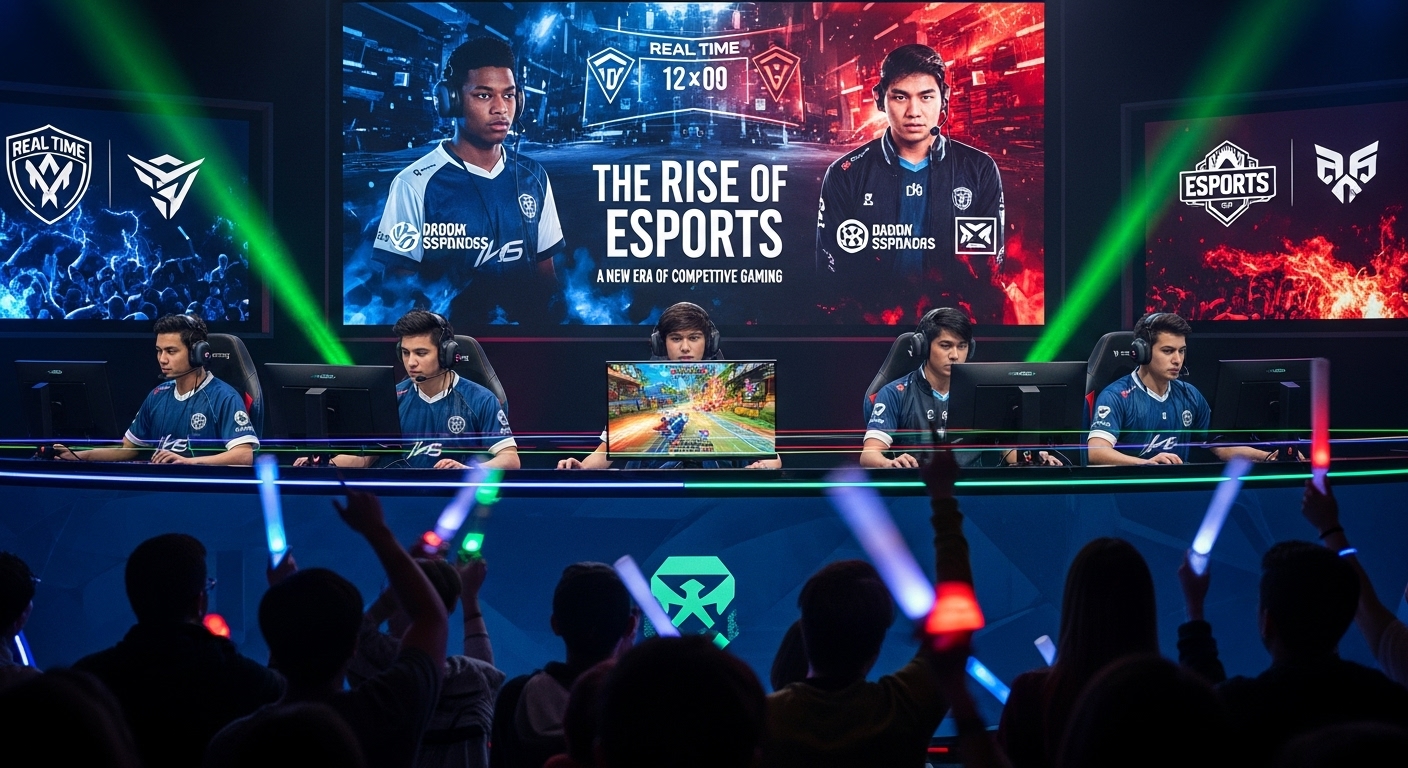
Esports, or electronic sports, has evolved from a niche hobby into a full-fledged global phenomenon. Once seen as a pastime for gamers confined to basements and arcades, esports today commands audiences comparable to traditional sports leagues, attracting millions of viewers, sponsorships, and media attention. This transformation reflects not only technological advances but also shifts in culture, entertainment, and professional opportunities. In this blog, we’ll explore the history of esports, its growth as an industry, the diversity of gaming genres, the role of tournaments, and the broader impact it has on society.
The Origins of Esports
The roots of esports can be traced back to the early 1970s, when the first competitive video game events started appearing. One of the earliest known competitions was the “Intergalactic Spacewar Olympics” held at Stanford University in 1972, where players competed in the game Spacewar! for a small prize. While primitive by today’s standards, these early competitions laid the foundation for the concept of gaming as a competitive endeavor.
During the 1980s, arcades became central hubs for competitive gaming. Titles like Pac-Man, Donkey Kong, and Street Fighter drew large crowds, and high-score competitions began to emerge. These events were localized but fostered the idea that gaming could be more than a solitary pastime—it could be a competitive sport. The growth of home gaming consoles in the late 1980s and early 1990s, such as the Nintendo Entertainment System (NES) and Sega Genesis, further popularized gaming across households and introduced the concept of multiplayer competition on a larger scale.
By the 1990s, competitive gaming had expanded into the realm of personal computers. Games like Doom, Quake, and StarCraft laid the groundwork for professional esports, introducing competitive mechanics, leaderboards, and online play. South Korea, in particular, became a hotspot for esports, with the establishment of dedicated gaming centers and televised competitions for StarCraft, propelling the country to the forefront of esports culture.
Understanding Esports Today
Today, esports encompasses a wide range of games, tournaments, and professional leagues. Unlike casual gaming, esports focuses on skill, strategy, teamwork, and mental acuity. Professional players often train for several hours a day, mirroring the discipline seen in traditional sports athletes. Teams are organized, coached, and sponsored, and major events are broadcast globally on streaming platforms.
The modern esports ecosystem is complex and multifaceted. It includes developers who create competitive games, teams and organizations that manage professional players, event organizers who host tournaments, and media platforms that broadcast matches to audiences worldwide. The popularity of streaming platforms such as Twitch, YouTube Gaming, and others has allowed fans to engage with esports in real time, further driving its growth and accessibility.
Popular Esports Genres
Esports is not a monolithic entity; it comprises a variety of genres that appeal to different types of players and audiences. Some of the most prominent genres include:
Multiplayer Online Battle Arenas (MOBAs)
MOBAs are among the most popular esports genres, featuring team-based strategy and real-time combat. Games like League of Legends and Dota 2 dominate this space. Players work together to control a map, defeat opponents, and achieve strategic objectives. The complexity and depth of these games create a highly competitive environment where teamwork, communication, and tactical planning are crucial for success.
First-Person Shooters (FPS)
FPS games emphasize accuracy, reflexes, and strategic positioning. Titles like Counter-Strike: Global Offensive, Call of Duty, and Overwatch have vibrant competitive scenes. FPS esports often feature intense, fast-paced matches where split-second decisions can determine the outcome. These games appeal to players and audiences who enjoy high-intensity action and tactical gameplay.
Battle Royale Games
Battle royale games, including Fortnite and PUBG, feature large-scale maps where many players compete to be the last person standing. This genre blends survival, shooting mechanics, and strategy, creating unpredictable and thrilling gameplay. Its popularity in the esports scene has grown rapidly due to the combination of skill-based competition and spectator-friendly moments.
Sports and Racing Simulations
Esports is not limited to fantasy or action-based games; it also includes sports simulations such as FIFA, NBA 2K, and racing games like Gran Turismo. These games translate real-world sports into digital competitions, attracting both gaming fans and traditional sports enthusiasts. The competitive structure mirrors that of real-life sports leagues, complete with seasonal tournaments and championships.
Fighting Games
Fighting games like Street Fighter, Tekken, and Super Smash Bros. focus on one-on-one combat, where precision, timing, and reaction speed are paramount. Fighting game tournaments often have passionate and dedicated communities, and the skill ceiling allows for long-term mastery and rivalry between players.
The Role of Tournaments and Leagues
Tournaments are the lifeblood of esports. They provide a stage for players to showcase their skills, earn recognition, and compete for prize money. Esports tournaments vary in scale, from local competitions to global events with multi-million-dollar prize pools.
Some of the largest esports events include the League of Legends World Championship, The International for Dota 2, and Fortnite World Cup. These events attract millions of viewers worldwide and generate significant revenue through sponsorships, merchandise, and broadcasting rights. Esports leagues, such as the Overwatch League and Call of Duty League, have adopted franchised models similar to traditional sports, where teams represent cities or regions, creating sustained narratives and fan loyalty.
Tournaments are also essential for fostering community engagement. Fans gather online and offline to cheer for their favorite teams, discuss strategies, and celebrate memorable plays. The competitive structure of tournaments, with brackets, eliminations, and finals, mirrors the drama and excitement of traditional sports, making esports a highly engaging spectator experience.
Esports and Media Platforms
Streaming platforms have revolutionized the way esports reaches audiences. Platforms like Twitch, YouTube Gaming, and Facebook Gaming allow players to broadcast matches live, interact with viewers, and monetize their content. The rise of esports content creators and influencers has also contributed to the popularity of the industry, as fans can follow players’ personalities, training routines, and gaming highlights beyond formal competitions.
In addition to streaming, traditional media has taken notice. Networks and broadcasters now air esports competitions, and specialized esports channels provide coverage, analysis, and commentary. This media exposure legitimizes esports as a professional entertainment form and expands its reach to audiences who may not be familiar with gaming culture.
Economic Impact of Esports
Esports is more than entertainment; it is a booming industry with significant economic implications. Revenue streams include sponsorships, advertising, ticket sales, merchandise, broadcasting rights, and in-game purchases. Major brands, from technology companies to consumer goods, recognize esports as a valuable marketing channel to reach a young and highly engaged audience.
Professional esports players can earn substantial incomes through salaries, tournament winnings, and endorsements. Top-tier players and teams can command millions in contracts and prize money, rivaling traditional sports athletes in earning potential. Moreover, esports has created employment opportunities in related fields such as coaching, event management, broadcasting, and content creation.
The industry’s economic influence extends to regional development as well. Cities hosting esports events benefit from tourism, hospitality, and infrastructure investments. Some countries, particularly in Asia and Europe, have developed dedicated esports arenas and programs to attract international competitions and foster local talent.
Social and Cultural Significance
Esports has had a profound impact on culture and society. It has created a global community of players and fans connected through shared interests and digital platforms. The accessibility of esports allows people from diverse backgrounds to participate, breaking down traditional barriers of geography, gender, and social status.
Esports also promotes skills that extend beyond gaming. Professional players develop strategic thinking, teamwork, communication, and problem-solving abilities. These skills are transferable to other domains, including education and professional careers. Additionally, esports encourages digital literacy and technological engagement, preparing younger generations for a rapidly evolving digital world.
The cultural significance of esports is also evident in its influence on fashion, music, and entertainment. Gaming-inspired merchandise, collaborations with artists, and in-game events tied to popular media franchises have blurred the lines between gaming and mainstream culture, making esports a central part of contemporary entertainment.
Challenges and Criticisms
Despite its rapid growth, esports faces several challenges and criticisms. One major concern is player burnout. Professional esports players often practice for long hours under high-pressure conditions, leading to physical and mental health issues such as repetitive strain injuries, sleep deprivation, and stress. Organizations and leagues are increasingly recognizing the importance of player well-being and implementing measures such as regulated practice schedules, mental health support, and wellness programs.
Another challenge is inclusivity. While esports is theoretically accessible to anyone with an internet connection, gender disparities and representation issues persist. Female players and marginalized groups often face barriers to participation and recognition. Initiatives to promote diversity, inclusivity, and safe gaming environments are essential to ensuring that esports remains a welcoming space for all.
Cheating and integrity concerns also pose challenges. Competitive gaming relies on fair play, but incidents of cheating, match-fixing, and exploit abuse have occasionally tarnished the reputation of esports events. Strong regulations, monitoring systems, and community oversight are necessary to maintain credibility.
The Future of Esports
The future of esports looks promising and dynamic. Technological advancements, including virtual reality (VR), augmented reality (AR), and cloud gaming, have the potential to transform competitive gaming experiences. VR esports could offer immersive gameplay, while cloud platforms might reduce barriers to entry by enabling high-quality gaming on low-end devices.
The integration of esports with traditional sports and entertainment is also likely to grow. Collaborations between sports leagues, celebrities, and gaming companies are creating hybrid events that attract broader audiences. Educational institutions are increasingly offering esports programs, scholarships, and courses, recognizing the professional and academic potential of competitive gaming.
Global expansion is another key trend. While South Korea, China, and the United States remain esports powerhouses, emerging markets in Southeast Asia, Latin America, and Africa are rapidly developing competitive scenes. This growth will diversify the industry, introduce new talents, and create opportunities for cross-cultural exchange.
Conclusion
Esports has come a long way from humble beginnings in arcades and university competitions. It has transformed into a multifaceted industry that combines skill, strategy, entertainment, and community. With professional players, global tournaments, streaming platforms, and an engaged fan base, esports now rivals traditional sports in both cultural influence and economic impact.
As technology continues to evolve and the global community of players expands, esports will likely grow in significance, redefining what it means to compete, spectate, and participate in sports. It is not just a hobby or a form of entertainment—it is a cultural phenomenon that represents the future of digital competition and global connection.
Esports has proven that gaming is more than a pastime; it is a profession, a community, and a rapidly evolving industry with the potential to shape the landscape of entertainment, sports, and society for decades to come.