
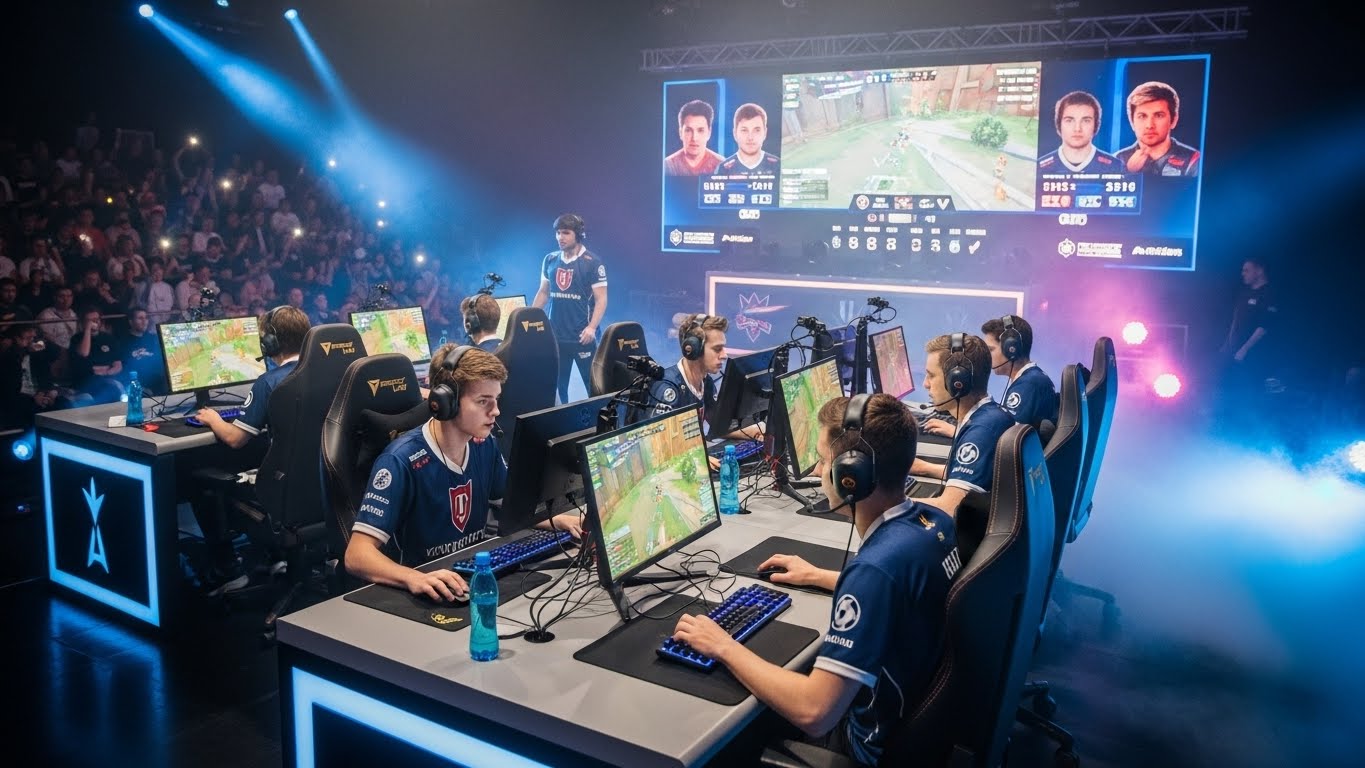
Esports, or competitive video gaming, has evolved from a niche hobby into a global phenomenon that rivals traditional sports in popularity and revenue. Over the past decade, esports has grown into a multibillion-dollar industry, attracting millions of fans, professional players, and investors worldwide. This blog explores the rise of esports, its cultural and economic impact, and the trends that will shape its future.
1. The Evolution of Esports: From LAN Parties to Global Arenas
Esports did not emerge overnight. Its roots can be traced back to the 1970s and 1980s when arcade competitions and early computer gaming tournaments began to gain traction. Games like Space Invaders and Pac-Man inspired local competitions, while the 1990s saw the rise of first-person shooters and real-time strategy games like Counter-Strike and StarCraft. These early competitions were often informal and community-driven, but they laid the groundwork for organized professional gaming.
With the advent of high-speed internet, competitive gaming expanded beyond local networks. Online multiplayer games allowed players to compete across the globe, giving birth to online tournaments and leagues. Today, esports tournaments fill stadiums, draw millions of viewers online, and feature sponsorships from some of the world’s largest brands. The evolution of esports reflects not only technological advancements but also a cultural shift toward digital entertainment.
2. Popular Esports Titles: The Games That Define the Industry
Several games have become synonymous with esports due to their competitive depth, large player base, and spectator appeal. Multiplayer online battle arena (MOBA) games like League of Legends and Dota 2 dominate the esports scene with complex strategies and team dynamics. First-person shooters like Counter-Strike: Global Offensive and Valorant emphasize precision, reflexes, and teamwork.
Battle royale games such as Fortnite and PUBG introduced a new style of competitive play with large-scale survival mechanics. Fighting games, including Street Fighter and Super Smash Bros., continue to attract dedicated fan communities through tournaments like EVO. Sports simulation games like FIFA and NBA 2K have also carved out a niche, allowing players to compete virtually in globally recognized sports. Each title contributes to the diversity and reach of esports, ensuring that there is something for every type of gamer and fan.
3. The Esports Ecosystem: Players, Teams, and Organizations
Professional esports operates through a structured ecosystem of players, teams, organizations, and leagues. Players often start as amateurs competing in local tournaments before signing with professional teams. Teams provide salaries, training facilities, coaching staff, and sponsorship deals, mirroring traditional sports organizations.
Major esports organizations like Team Liquid, Fnatic, and T1 operate across multiple games, managing rosters of professional players while promoting their brand through merchandise, media, and events. Esports leagues and tournaments, such as the League of Legends World Championship and the Fortnite World Cup, offer prize pools that rival traditional sports, further incentivizing professional play.
Beyond the competitive side, there is also a growing ecosystem of content creators, streamers, and influencers who engage audiences through platforms like Twitch and YouTube. This broad ecosystem ensures that esports reaches millions of fans, providing entertainment both inside and outside the competitive arena.
4. Esports as a Spectator Sport: The Role of Streaming and Media
One of the defining characteristics of esports is its spectator culture. Unlike traditional sports that rely on stadium attendance, esports primarily thrives online through streaming platforms. Twitch, YouTube Gaming, and other streaming services allow millions of fans to watch live matches, interact with players, and engage in community discussions.
Esports broadcasting has evolved to include professional commentary, live analysis, and multi-camera setups that enhance the viewing experience. The integration of augmented reality and in-game graphics provides fans with deeper insights into player strategies and performance metrics. This immersive viewing experience has helped esports attract mainstream media attention, with networks covering major tournaments and even creating dedicated esports channels.
Streaming platforms have also enabled fans to directly support their favorite players and teams through subscriptions, donations, and sponsorships, creating a unique fan economy that sustains the industry. The combination of interactive media and digital accessibility makes esports a dynamic and evolving spectator sport.
5. The Economic Impact of Esports
Esports is not only a cultural phenomenon but also a powerful economic engine. Global revenue from esports has surpassed billions of dollars, driven by sponsorships, advertising, merchandise, ticket sales, and media rights. Major brands from tech, apparel, and energy drink industries invest heavily in esports sponsorships to reach younger audiences who engage more with gaming than traditional media.
Tournaments offer prize pools that can exceed millions of dollars, attracting top talent and increasing competitive stakes. Esports events also generate significant economic activity in host cities through tourism, hospitality, and event management. In addition, professional players, coaches, content creators, and analysts form an entire industry ecosystem, contributing to job creation and career opportunities in gaming-related fields.
The rapid growth of esports has also led to investments in infrastructure, such as dedicated esports arenas, training centers, and gaming incubators. These developments not only support professional gaming but also provide a foundation for the next generation of esports talent.
6. Esports and Education: Nurturing Talent from a Young Age
Esports has found its way into educational institutions, from high schools to universities. Many schools now offer esports programs that include training, competitions, and scholarships. Universities in countries like the United States, South Korea, and China have established varsity esports teams, providing students with the opportunity to compete professionally while earning a degree.
These programs focus not only on gaming skills but also on teamwork, strategy, communication, and mental resilience. By integrating esports into education, institutions are acknowledging gaming as a legitimate career path while promoting skills that are transferable to other professional fields. This growing recognition also helps combat negative stereotypes about gaming, highlighting its potential for personal growth and career development.
7. Challenges Facing the Esports Industry
Despite its rapid growth, esports faces several challenges. Player burnout is a major concern, as professional gamers often train for long hours under high-pressure conditions. Mental health issues such as anxiety, stress, and sleep deprivation are common among top-level players. Organizations are beginning to address these issues by providing mental health support and implementing structured training schedules.
Regulation and standardization are also ongoing challenges. Unlike traditional sports, esports lacks a universal governing body, leading to inconsistencies in rules, tournament structures, and player contracts. Additionally, issues like cheating, match-fixing, and doping have emerged, requiring strict oversight and enforcement.
Monetization models and audience engagement are evolving, but maintaining sustainable growth while balancing commercial interests with fan experience remains a critical challenge. Despite these hurdles, the esports industry continues to innovate and expand, finding solutions that ensure its long-term viability.
8. The Global Reach of Esports
Esports is a truly global phenomenon, with significant fan bases in North America, Europe, and Asia. South Korea is widely regarded as the birthplace of professional esports, with a well-established infrastructure, dedicated gaming culture, and government support. China has rapidly emerged as a dominant force, with massive investments in leagues, teams, and streaming platforms.
In Europe and North America, esports has gained mainstream acceptance, with tournaments filling arenas and receiving media coverage on major networks. Emerging markets in Latin America, Southeast Asia, and the Middle East are also experiencing rapid growth, fueled by increased internet access, mobile gaming, and local tournaments. The global reach of esports highlights its potential to unify diverse cultures through shared gaming experiences.
9. The Future of Esports: Trends to Watch
The future of esports is poised for further growth and innovation. Virtual reality and augmented reality are expected to create new forms of immersive competitive experiences. Mobile esports will continue to expand, particularly in regions where mobile gaming is more accessible than PC or console gaming.
Artificial intelligence and analytics will play an increasing role in training, strategy development, and fan engagement. Esports betting and fantasy esports leagues are also emerging as new revenue streams. Additionally, partnerships between esports and traditional sports organizations are likely to expand, bridging the gap between digital and physical sports entertainment.
As esports becomes more mainstream, it will continue to influence culture, technology, and the entertainment industry, shaping a future where gaming is recognized not just as a pastime, but as a competitive and professional pursuit.
Conclusion: Esports as a Cultural and Economic Force
Esports has come a long way from its humble beginnings as casual competitions among friends. Today, it represents a major cultural and economic force, redefining entertainment, career opportunities, and global connectivity. The growth of esports demonstrates that gaming is more than just a hobby—it is a professional industry with a vibrant ecosystem and a passionate global community.
As technology continues to advance, and as audiences and players expand, esports will only become more influential. Its impact on entertainment, education, and the economy will continue to grow, making it an essential part of modern culture. The rise of esports proves that competitive gaming is here to stay, offering endless opportunities for players, fans, and innovators around the world.